

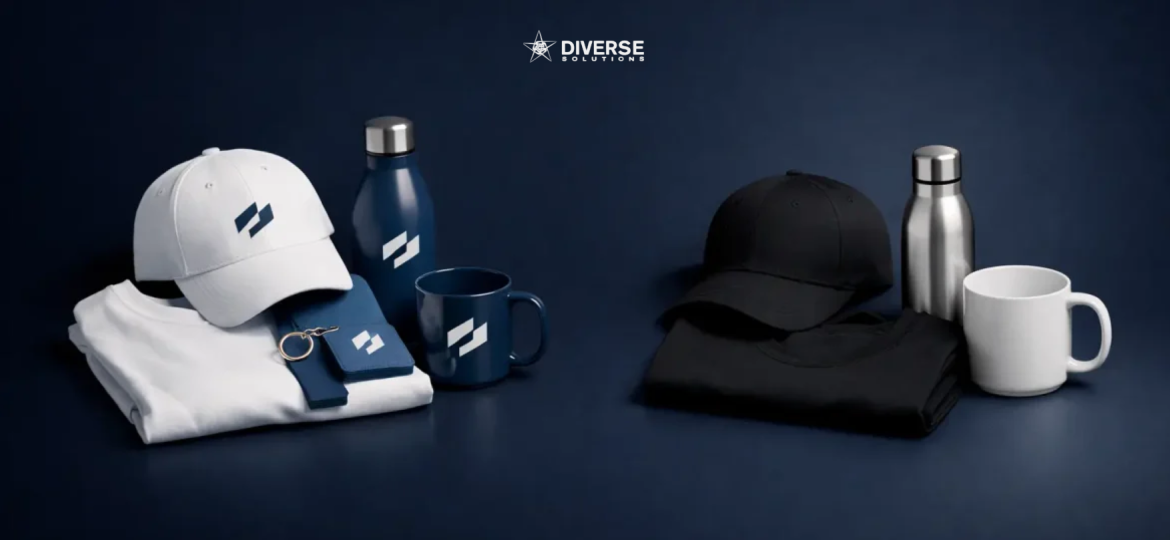
A campaign launch is two weeks away. Your event team needs practical giveaways, HR wants welcome packs for new hires, and the brand team needs every item to look intentional. This is where the choice between custom merchandise vs ready stock becomes more than a sourcing decision. It affects timing, brand consistency, recipient experience, and the amount of coordination required from your team.
Ready-stock merchandise can help organizations move quickly when a proven item is needed without delay. Custom merchandise offers greater control over design, materials, packaging, and how the item represents the organization. Neither option is automatically better. The right choice depends on the purpose of the project and the experience you want people to remember.
Custom Merchandise vs Ready Stock: The Core Difference
Ready stock refers to items that are already available in standard forms, such as drinkware, stationery, bags, apparel, technology accessories, or event essentials. These products can typically be selected from an existing range and personalized with a logo, artwork, or message where appropriate. Because the base item has already been produced, the process is generally more direct.
Custom merchandise is developed around a specific brief. Instead of starting with a catalog item, the organization can define the item’s form, color, material, dimensions, print treatment, packaging, and functional details. A custom item may be created for a product launch, anniversary, employee initiative, VIP program, school event, or large-scale brand activation.
The difference is not simply whether a logo is added. It is the degree of control over the final brand experience. Ready stock is often about efficient execution. Custom merchandise is about creating something more distinctive and purpose-built.
When ready stock is the practical choice
Ready stock works well when speed, familiarity, and dependable availability are priorities. For example, an event organizer preparing attendee packs may need useful items that can be branded quickly and distributed with minimal complexity. A corporate communications team may need a consistent supply of practical gifts for meetings, partner visits, or internal engagement activities throughout the year.
It is also a sensible route when the item itself does not need to carry the full creative idea. A well-selected notebook, reusable bottle, tote bag, or desk accessory can still feel considered when the branding is clear, the print quality is professional, and the item suits the audience.
The risk is treating ready stock as an afterthought. A generic product with an oversized logo may be available quickly, but it may not reflect the level of care your organization wants to communicate. Selection still matters. Consider whether the item is useful, whether it aligns with your visual identity, and whether recipients are likely to keep it.
When custom merchandise creates more impact
Custom merchandise is most valuable when the item needs to do more than display a logo. It may need to reinforce a campaign concept, express a company culture, support a milestone, or create a more memorable connection with a specific audience.
A recruitment campaign, for instance, may call for a welcome kit designed around the employee journey rather than a collection of unrelated items. A government agency or educational institution may need materials that reflect an initiative’s themes while remaining practical for participants. A business launching a new service may want a branded piece that gives customers a tangible reminder of the message.
Custom development gives teams more room to connect design with purpose. The shape of an item, the colors used, the unboxing experience, and the message placed inside the packaging can all work together. This level of detail is especially useful when merchandise is part of a larger event, marketing, print, or digital campaign.
That said, customization requires clearer planning. Decisions need to be made earlier, including artwork approvals, prototypes where needed, production specifications, quantities, and delivery requirements. The more distinctive the concept, the more important it is to have a structured process behind it.
Start With the Job the Merchandise Must Do
Before selecting products, define the role the merchandise will play. This prevents teams from choosing an item based only on what looks appealing in the moment.
For employee engagement, the goal may be belonging and appreciation. Useful, well-presented items often perform better than novelty products that have little relevance to daily work. For a customer event, the objective may be recall. The item should connect naturally to the event theme and remain useful after the event ends. For a sales or partner program, the priority may be professionalism and perceived value, making material quality and presentation more significant.
Audience behavior should guide the choice as well. A commuter may value a compact, portable item. Students may respond to functional learning or technology accessories. Senior stakeholders may appreciate a refined, thoughtfully packaged gift. The best merchandise does not try to impress everyone in the same way. It demonstrates that the organization understands the recipient.
Consider Timing Before Creative Ambition
Timing is often the deciding factor in custom merchandise vs ready stock planning. A strong creative concept is only useful if it can be approved, produced, checked, and delivered in time for the intended moment.
Ready stock offers an advantage for projects with short lead times or evolving requirements. It gives teams a practical foundation while still allowing room for branded artwork, packaging inserts, and coordinated presentation. This can be particularly helpful when event attendance numbers are still changing or when several internal stakeholders must approve materials.
Custom merchandise needs earlier commitment, but that does not mean it should be reserved only for major campaigns. Smaller custom details can create a meaningful difference when planned properly. Custom sleeves, gift boxes, printed cards, themed bundles, or tailored color treatments may elevate an established item without requiring every component to be developed from scratch.
A useful planning question is this: what decisions must be finalized before production can begin? Once teams identify those approval points, they can choose an approach that protects the delivery schedule rather than putting it at risk.
Brand Consistency Is More Than a Logo
Organizations often focus on the logo placement first. It matters, but brand consistency extends to color accuracy, typography, artwork scale, material selection, tone of voice, and packaging. These details determine whether merchandise feels like a genuine brand touchpoint or a separate promotional item.
With ready stock, consistency comes from disciplined selection and correct application. Choose products that suit your brand’s personality, then ensure artwork is adapted to the available print area rather than forced onto it. A restrained, well-positioned design often looks more premium and readable than a crowded layout.
With custom merchandise, consistency can be built into the product from the beginning. This is useful for organizations with established brand systems, campaign identities, or specific accessibility and usability requirements. It also creates an opportunity to align physical merchandise with event graphics, printed collateral, digital communications, and environmental branding.
For teams managing multiple suppliers, this is where coordination can become difficult. A single partner that can advise on creative direction, production methods, packaging, and delivery helps reduce gaps between the original concept and the final item.
A Hybrid Approach Often Makes Sense
The decision does not always need to be either custom or ready stock. Many effective merchandise programs combine both.
A conference kit might use ready-stock essentials such as notebooks and bottles, then add a custom-designed welcome card, packaging band, or campaign-specific item. An employee onboarding package may include reliable standard products alongside a customized element that reflects the organization’s culture. This approach keeps the program practical while giving it a distinctive point of view.
A hybrid model is also helpful for recurring initiatives. Organizations can maintain a dependable range of core branded merchandise for routine needs, while reserving custom development for key moments such as launches, anniversaries, recognition programs, and flagship events. This creates consistency without making every request a full production project.
Plan for the Experience After Delivery
Merchandise decisions should account for what happens after the items arrive. Will they be packed individually, distributed at an event, mailed to remote employees, displayed at a booth, or stored for ongoing use? The answer affects packaging, labeling, quantities, and fulfillment planning.
Quality control matters at this stage. Artwork should be checked against approved files, branding should be consistent across items, and the final presentation should match the standard promised to internal teams or external recipients. For multi-item kits, the order in which items are packed can influence the unboxing experience as much as the products themselves.
Diverse Solutions supports organizations by bringing creative development, merchandise sourcing, production, print, packaging, and delivery coordination into one managed process. That integrated approach is particularly useful when merchandise must work alongside broader branding or event requirements.
The most effective choice is the one that makes the recipient feel the organization has been thoughtful. Whether that starts with a ready-stock item or a fully custom concept, merchandise earns its value when it is useful, well executed, and clearly connected to the message behind it.
