

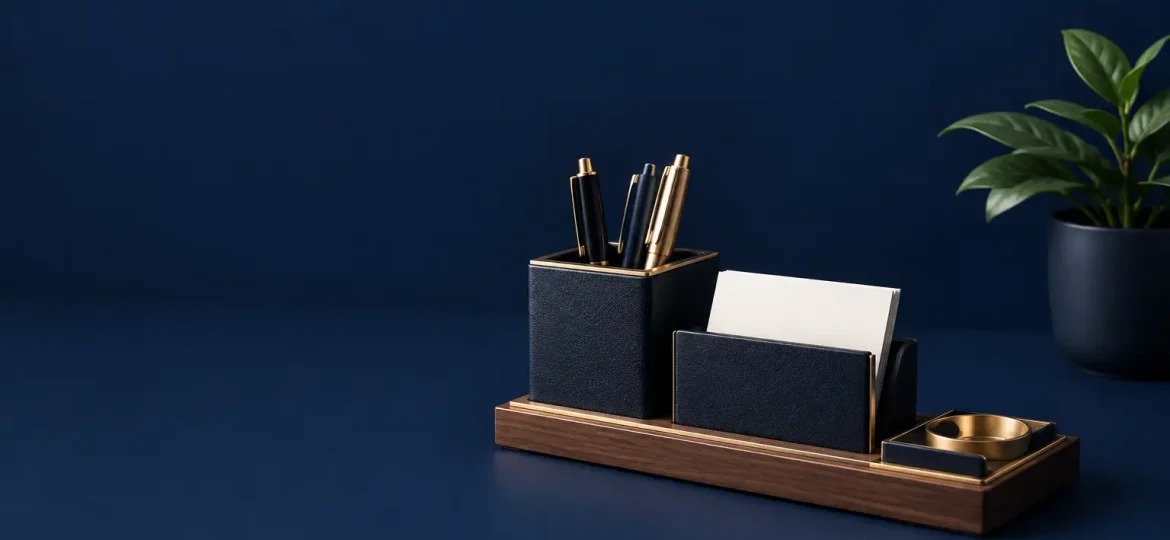
An executive desk is rarely just a work surface. It is where client conversations begin, decisions are signed off, and employees form impressions about leadership standards. The best executive desk accessories bring order to that visible space while expressing the organization’s character with restraint, quality, and purpose.
For marketing, HR, procurement, and operations teams, the selection is not simply about finding attractive office items. It involves matching materials to the company’s brand, choosing products leaders will genuinely use, and coordinating presentation across offices, meeting rooms, onboarding programs, and corporate gifts. The most successful choices feel considered rather than decorative.
What Executive Desk Accessories Should Accomplish
A well-chosen accessory should earn its place on the desk. It may make a frequent task easier, reduce visual clutter, provide a polished place for visitors to set materials, or create a quiet reminder of the organization’s identity. When several items do those jobs together, the desk appears organized without becoming overstyled.
This is especially relevant in executive offices and client-facing environments. A mismatched collection of promotional items can dilute the setting, even when each individual item is useful. Conversely, a coordinated set of understated accessories can signal that the organization pays attention to detail in both its operations and its brand presentation.
The right balance depends on the space. A leader who works from a compact office may benefit from a slim wireless charging stand and a combined pen holder and document tray. A boardroom-facing executive may place more value on premium stationery, a refined nameplate, and a presentation folder that supports meetings. There is no single set that works for every role.
Best Executive Desk Accessories for a Polished Workspace
Rather than filling a desk with branded merchandise, begin with the moments that happen there most often: taking notes, charging a phone, reviewing documents, meeting visitors, and storing essential tools. The following categories offer practical ways to build a cohesive executive setup.
Premium writing instruments and pen holders
A dependable pen remains one of the most used and noticed desk items. For executive use, the finish, weight, ink quality, and packaging matter as much as the logo. Metal pens with laser-engraved branding or subtle color detailing tend to look more appropriate than heavily printed plastic alternatives.
Pairing the pen with a desk holder creates a more complete presentation. Leatherette, wood, metal, or recycled composite materials can each work well, provided they reflect the broader interior and brand direction. A financial services firm may favor dark, understated finishes, while a creative organization might use a distinctive but controlled brand color.
Wireless charging stands and tech organizers
Mobile devices are part of nearly every executive workday. A wireless charging stand keeps a phone accessible during calls and meetings without introducing visible cable clutter. Models that hold the device upright are especially useful for viewing notifications or joining video calls.
Technology accessories require careful specification. Confirm device compatibility, charging performance, safety certifications, cable requirements, and available branding areas before approving a large order. An accessory that looks polished but frustrates users will not reinforce a positive brand experience.
Cable organizers, headphone stands, and compact desktop hubs can also be valuable where they solve a genuine workspace problem. Keep the number of tech items selective. The goal is functional order, not a desk that resembles a retail display.
Desk pads, document trays, and presentation pieces
A desk pad gives an executive workspace a grounded, finished look while protecting the surface underneath. It also defines a useful writing area during discussions. Quality options include leatherette, cork, felt, and smooth recycled materials, with discreet debossing or corner branding for a more premium effect.
Document trays and letter organizers are particularly useful for roles handling approvals, contracts, or meeting materials. Select stackable or modular formats if workflows require separation between incoming documents, items awaiting action, and completed work. In a paper-light office, a single tray may be enough for visitor materials or signed documents.
Presentation pieces deserve similar attention. A branded folder, notebook, or clipboard placed on the desk can turn a routine meeting into a more consistent brand moment. These items should be designed as part of the accessory system, using compatible colors, finishes, and logo treatment.
Personalized nameplates and business card holders
A nameplate offers clarity in an executive office, reception setting, or meeting room. It is also a simple way to recognize a leader’s role without relying on excessive decoration. Acrylic, metal, wood, and layered materials each create a different impression, so material selection should align with the company’s environment.
Business card holders remain useful in industries where in-person meetings, site visits, and formal introductions are common. Even organizations that primarily exchange details digitally may benefit from a refined holder for reception counters, visitor areas, and executive desks. The branding should be subtle enough to look permanent rather than campaign-specific.
Executive notebooks and curated desk sets
A notebook is one of the easiest accessories to customize well because it supports everyday use. The strongest versions focus on tactile quality: a durable cover, smooth paper, useful page layout, and binding that opens comfortably. Personalization, such as a recipient name or a short internal message, can make the item feel more intentional.
A curated desk set can combine a notebook, pen, charging accessory, and compact organizer in coordinated packaging. This approach is useful for leadership appointments, milestone recognition, board meetings, and executive onboarding. It also reduces the risk of sourcing individual items that do not visually or functionally belong together.
How to Select Accessories That Reflect Your Brand
Start with the intended setting and recipient. An executive office, a new leader’s welcome package, and a client meeting room have different requirements. Define whether the accessory is primarily for daily productivity, visitor impression, staff recognition, or relationship building. That decision guides material, branding level, and packaging.
Next, establish a consistent design language. This does not mean placing a large logo on every surface. Consistency can come through a recognizable color, a repeated texture, a particular metal finish, or a carefully selected type treatment. A small debossed logo on a desk pad may communicate more confidence than oversized printing across multiple items.
Quality control is equally important. Review prototypes or samples before production, particularly for engraved metal, coated surfaces, wireless devices, and products with several assembled components. Check logo placement, color accuracy, material feel, packaging, and durability in normal use. For multi-item sets, assess how the items look together once unpacked, not only as separate samples.
Operational details should be considered early. Procurement teams may need individual naming, inventory tracking, delivery to multiple offices, or coordinated fulfillment for a leadership event. Working from one approved design system and one production plan makes it easier to maintain consistency when additional accessories are needed later.
Avoid the Common Desk Accessory Mistakes
The most common mistake is selecting items solely because they can be branded. If an accessory has no clear use, it often ends up stored away, which limits both its value and its visibility. A smaller group of practical, well-made products usually creates a stronger impression than an expansive assortment.
Another mistake is treating every executive recipient identically. Senior leaders may have different work styles, office layouts, and technology preferences. Where appropriate, allow a degree of personalization while retaining the core design system. For example, the same notebook and pen style can be paired with either a charging stand or document organizer based on the recipient’s role.
Finally, avoid making the desk too busy. A premium desk setup needs visual breathing room. Choose a few accessories that work together, then leave space for the work itself. The result is more professional, more usable, and more likely to remain in place over time.
A thoughtfully specified executive desk accessory program can make everyday work feel more organized and intentional. With the right creative direction, product sourcing, customization, and delivery coordination, Diverse Solutions helps organizations turn practical desk items into consistent, credible expressions of their brand.
