

A corporate event rarely fails because of one big mistake. More often, it slips through a dozen small gaps – late print files, mismatched branding, unclear vendor ownership, delayed giveaways, poor on-site flow, or a follow-up plan that never gets used. That is why event management for corporate events is not just about booking a venue and filling a run sheet. It is about protecting the brand experience at every touchpoint.
For marketing teams, procurement leads, HR departments, and institutional organizers, the pressure is not simply to host an event. The pressure is to deliver one that looks polished, runs on time, supports business goals, and does not create unnecessary coordination work. The strongest events are usually built the same way strong campaigns are built – with clear objectives, controlled production, and dependable execution.
What event management for corporate events really involves
Corporate events come in many forms, from conferences and product launches to appreciation dinners, internal town halls, recruitment fairs, and roadshows. Each one has a different audience, budget profile, and success metric. A client appreciation event may prioritize hospitality and premium gifting, while a trade event may depend more on booth design, lead capture materials, signage, and fast setup.
That is why event management has to go beyond logistics. It needs to connect event operations with branding, content, print, merchandise, photography, and post-event use of assets. If those elements are handled in isolation, quality often suffers and timelines become harder to control. If they are planned together, the event becomes more efficient and more consistent from invitation to follow-up.
This is where many organizations feel the strain. One vendor handles backdrops, another handles gifts, another handles event staffing, and someone internally is chasing artwork approvals across all of them. The trade-off is obvious. Specialist vendors can be useful, but managing too many moving parts often increases the risk of delays, duplicated work, and uneven brand presentation.
Start with business outcomes, not event activities
A packed agenda does not always equal a successful event. Before production begins, it is worth asking a simple question: what should this event achieve for the organization?
Sometimes the answer is revenue-focused, such as generating leads or supporting a launch. Sometimes it is relational, such as strengthening employee engagement, building partner loyalty, or reinforcing credibility with stakeholders. In government, education, and enterprise settings, the event may also need to satisfy protocol, procurement, accessibility, or documentation requirements.
These objectives shape practical decisions. If the goal is lead generation, registration flow, booth traffic, printed collateral, and branded takeaways deserve close attention. If the goal is internal engagement, stage experience, audience participation, visual consistency, and photography become more important. Then if the goal is executive credibility, details like name badges, signage, presentation support, and hospitality standards carry more weight.
Without that early clarity, budgets are often spent on visible items that do not actually support the event’s purpose.
Planning timelines matter more than most teams expect
The earlier an event is scoped properly, the more options remain available. Venues, premium gifts, custom fabrication, print runs, photography schedules, and installation windows all become harder and more expensive when decisions are delayed.
That does not mean every event needs months of planning. Some smaller internal events can move quickly. But the more customized the event is, the more lead time matters. Custom merchandise needs artwork approval. Signage and print need production checks. Event gifts need sourcing, branding, and packing. On-site builds need coordination with venue rules and timing.
A realistic timeline should account for concept development, design, approvals, procurement, production, delivery, setup, event-day management, and teardown. It should also reflect where bottlenecks usually happen. In most organizations, the slowest stage is not production itself. It is approval.
A commercially minded event plan builds that reality into the schedule rather than pretending it will not happen.
Branding is not decoration – it is part of event performance
In corporate environments, branding should do more than make the venue look attractive. It should help people understand where to go, what is happening, who is speaking, and what the organization wants them to remember.
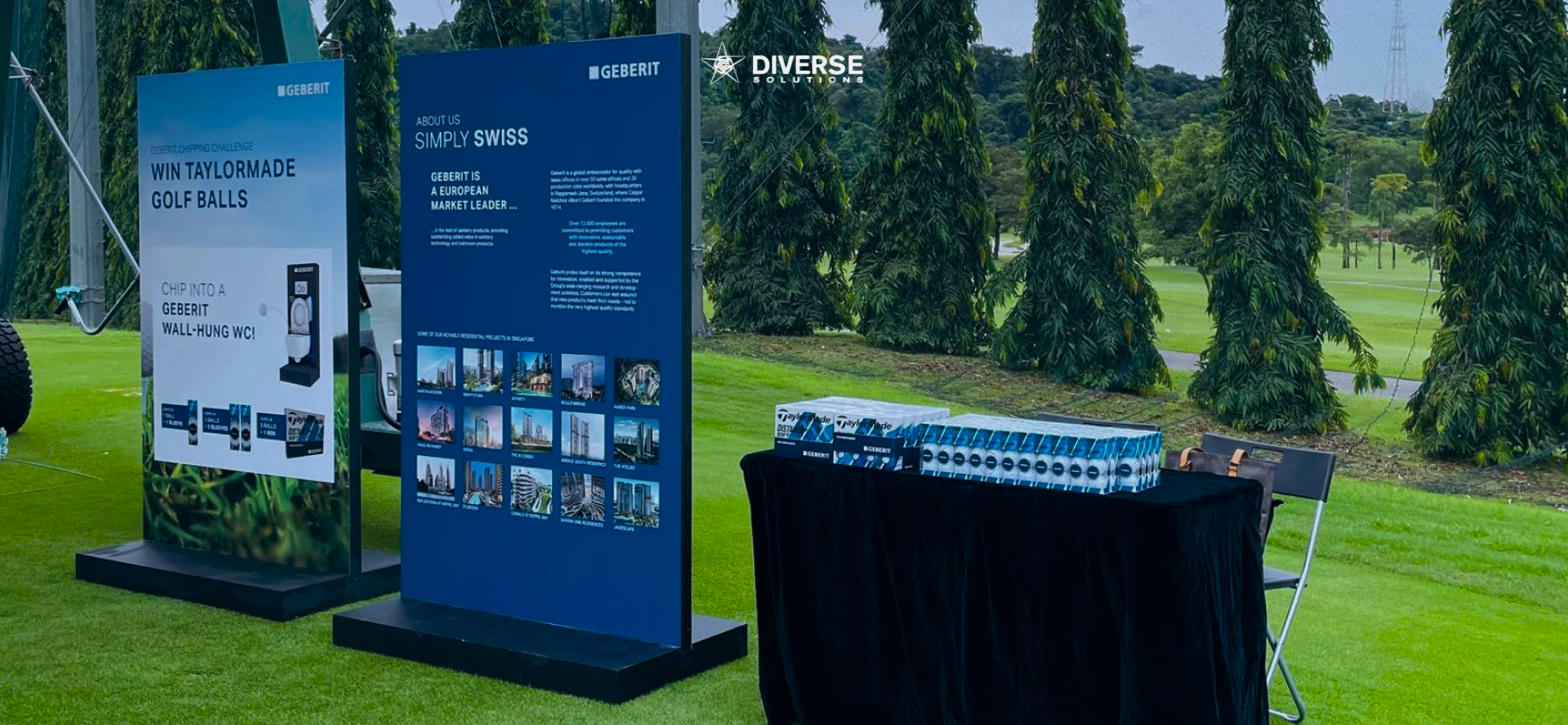
That includes obvious pieces like stage backdrops, registration counters, directional signage, presentation templates, and booth graphics. It also includes the smaller details that shape perception: printed agendas, name tags, table materials, product display labels, welcome kits, and event gifts.
Strong branding at an event feels coherent rather than excessive. There is a balance to strike. Too little branding can make the event feel generic. Too much can make it look cluttered or overly promotional, especially in executive or institutional settings. The right approach depends on audience, venue, and purpose.
For organizations managing multiple touchpoints, working with a partner that can align design, print, merchandise, and production often reduces rework. It also helps ensure logos, colors, messaging, and material quality stay consistent throughout the attendee experience.
Why one-stop execution can reduce event risk
When a corporate event includes invitations, display materials, branded gifts, photography, signage, and digital support, coordination becomes a job of its own. Every handoff creates room for misalignment. A print file may use an outdated logo. Gift packaging may not match the campaign visuals. The event photographer may not know which moments matter most for post-event communications.
A one-stop approach does not solve every problem, but it can simplify ownership. Fewer vendors usually means fewer approval loops, fewer formatting issues, and better visibility across the entire project. For busy corporate teams, that operational clarity is valuable.
This model is especially practical when the event needs to extend beyond the event day itself. A product launch may require teaser visuals, event-day branding, media backdrops, printed materials, gift packs, and follow-up content. Managing those pieces under one roof can improve both speed and consistency. It is one reason organizations often prefer full-service partners such as Diverse Solutions Singapore when reliability and coordination matter as much as creativity.
The most overlooked part of event management for corporate events
Many teams focus heavily on pre-event preparation and event-day delivery, then lose momentum immediately after the program ends. That is a missed opportunity.
Post-event work often determines the business value of the event. Photos can support future campaigns. Video clips can be reused internally or externally. Gift and attendance feedback can reveal what resonated. Lead lists need follow-up. Internal stakeholders may need reporting. Procurement teams may need documentation. Senior management may want a clear view of outcomes against spend.
If none of this is planned early, the event becomes a one-day effort instead of a business asset.
This is also where practical event management shows its value. The right team thinks beyond setup and teardown. They consider what materials need to be repurposed, what content should be captured, what inventory should be tracked, and what reporting should be prepared while decisions are still being made.
Common trade-offs organizations should weigh
Not every event needs premium everything. Budget discipline is part of good event planning. The question is where spending has the strongest impact.
For example, high-end gifting can be effective for VIP events, client appreciation programs, and executive gatherings. For high-volume roadshows or recruitment events, practical branded items with fast turnaround may make more sense. Custom staging can elevate a launch, but for a straightforward internal session, clear signage and reliable AV may matter more than elaborate build-outs.
There is also a trade-off between customization and speed. Fully customized event materials create stronger differentiation, but ready-stock options can be the smarter call when timelines are short. The best decision usually depends on audience expectations, event stakes, and how much control the team has over approvals.
Experienced event planning is not about choosing the most expensive option. It is about knowing where customization drives value and where standardization protects budget and delivery.
What buyers should look for in an event partner
A capable event partner should be able to do more than present ideas. They should be able to scope clearly, advise on trade-offs, manage production realities, and keep quality consistent under deadline.
That means asking practical questions. Can they support both creative and operational execution? Can they handle print, signage, gifts, and visual materials without outsourcing every detail? Do they understand corporate approval processes? Can they adapt for enterprise, education, or public-sector requirements? Can they respond quickly when changes happen close to event day?
Reliability is often less visible than design, but it matters more when schedules tighten. The partner you want is the one who can turn a moving brief into a finished event without creating unnecessary friction for your internal team.
Corporate events are high-visibility moments. They reflect how an organization presents itself to clients, employees, partners, and stakeholders. Good execution builds confidence. Poor execution gets remembered for the wrong reasons. When event planning is approached as an integrated business function rather than a collection of tasks, the result is not only a better event, but a stronger brand presence long after the room is cleared.
