

Budget pressure is getting tighter, expectations are getting higher, and generic gift sets are losing ground fast. That is what makes corporate gifting trends 2026 worth watching closely. For marketing teams, procurement leaders, HR departments, and event organizers, gifting is no longer a side task. It is a visible part of brand experience, employee engagement, and campaign execution.
The shift is not simply toward more premium products. It is toward better choices. Buyers want gifts that feel considered, arrive on time, reflect the brand properly, and serve a real purpose after the handover. The strongest gifting programs in 2026 will not come from chasing novelty alone. They will come from aligning merchandise, design, packaging, timing, and audience needs under one clear strategy.
Corporate gifting trends 2026 buyers should watch
One of the biggest changes is the move away from volume-first gifting. For years, many organizations measured success by quantity – how many hampers sent, how many event giveaways distributed, how many festive sets packed. That model still has a place, especially for large campaigns and public events, but it is no longer enough on its own.
Decision-makers are asking sharper questions. Will the recipient actually use this item? Does it support the campaign theme? Can the product quality represent the brand well? Is the packaging polished enough for executive delivery? Can the same vendor also handle inserts, print collateral, event signage, or fulfillment support? In practice, gifting is being evaluated less like a purchase order and more like a branded touchpoint.
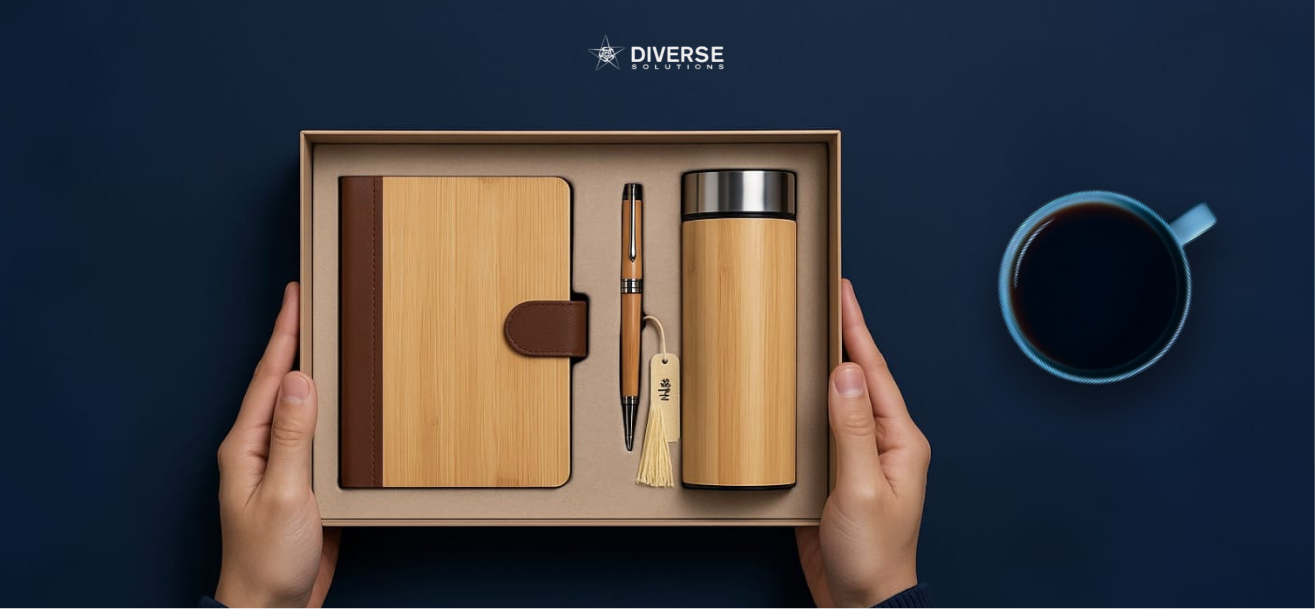
That is why practical premium is rising. Items such as insulated drinkware, desk accessories, tech organizers, travel essentials, and well-designed lifestyle products continue to outperform novelty products with a short shelf life. Useful does not mean plain. It means the product has a stronger chance of staying in rotation, which extends brand visibility well beyond the handover moment.
There is also a growing preference for gifts that feel curated instead of random. A well-matched bundle with consistent branding, a smart message card, and clean presentation can outperform a more expensive but disconnected gift mix. The product still matters, but the overall experience now matters just as much.
Personalization is becoming more selective
Personalization remains strong, but the approach is changing. In the past, customization often meant putting a logo on everything possible. In 2026, organizations are becoming more selective about where and how branding appears.
Subtle branding is gaining traction for client and executive gifts, where discretion often reads as more premium. Internal gifting, on the other hand, may lean more openly branded when the goal is culture-building or employer visibility. This is a useful distinction because not every gifting objective is the same. A staff onboarding pack, a customer appreciation set, and a conference giveaway should not all look or function alike.
Audience segmentation is now a serious advantage. Instead of one universal gift for every stakeholder, more companies are creating tiers based on recipient profile, event type, or campaign value. That does require more planning, but it usually delivers better response. A finance team sending year-end gifts to key clients may need a different presentation style than a university preparing orientation merchandise or a government agency planning a public outreach event.
This is where execution can become complicated. More versions, more packaging needs, and more timelines increase the risk of inconsistency. Working with a partner that can manage product sourcing, design adaptation, print elements, and delivery coordination under one roof becomes a practical business decision, not just a convenience.
Sustainability is expected, but it must be credible
Sustainable gifting is not new, but in 2026 the expectation is sharper. Buyers are more alert to whether a product is genuinely useful and responsibly positioned, or simply marketed with vague eco language. That puts pressure on both product selection and communication.
The strongest approach is not performative sustainability. It is thoughtful sustainability. Reusable drinkware, durable bags, long-life office tools, and packaging with less waste all make sense when they support actual use. A gift that lasts two years is often a better brand decision than a biodegradable product no one wants to keep.
There is a trade-off here. Some sustainable materials can increase unit cost or limit color and finish options. Some buyers will still prioritize price, especially for large quantity campaigns. That is reasonable. The goal is not to force every project into the same sustainability standard. The goal is to make better choices where they count and communicate them honestly.
For many organizations, this means choosing fewer throwaway items and investing more in products with repeat use. It can also mean simplifying packaging, reducing unnecessary inserts, and designing branding that feels timeless enough to avoid waste from frequent visual changes.
Faster timelines are shaping product choices
One of the less glamorous but more decisive corporate gifting trends 2026 is speed. Campaign windows are tighter, event calendars shift quickly, and internal approvals rarely move as fast as delivery expectations. As a result, buyers are balancing customization ambitions against lead time realities much earlier in the process.
Ready-stock options with strong branding potential are becoming more valuable. They offer a practical middle path between fully bespoke production and rushed last-minute purchases. When chosen well, ready-stock does not have to look generic. Good design, smart print application, coordinated packaging, and supporting collateral can elevate standard items into a polished branded set.
This matters for event organizers and marketing teams in particular. A product is only one part of the final impression. If the same campaign also requires invitation cards, booth materials, signage, backdrops, product inserts, or photography, fragmented vendor management can slow everything down. The more moving parts involved, the more value there is in centralized execution.
Gifting is becoming part of campaign systems
The most effective buyers no longer treat gifting as a standalone order. They treat it as part of a larger campaign system. That mindset is defining the best programs heading into 2026.
For product launches, gifts are supporting awareness and recall. For employee engagement, they reinforce culture and recognition. For trade shows and conferences, they drive booth traffic and post-event visibility. For seasonal outreach, they help maintain relationships in a crowded communications period. In every case, the gift performs better when it is integrated with the rest of the campaign.
That integration can be simple. Matching the visual theme across gift packaging, printed materials, digital assets, and event displays already creates a more professional impression. It can also be more advanced, with segmented messaging by audience type, staggered delivery timing, and tailored presentation formats.
This is where one-stop execution has a measurable advantage. When the merchandise, print components, creative direction, and event support are coordinated together, buyers reduce approval loops and lower the risk of mismatched branding. For organizations managing multiple stakeholders, that operational control is often just as important as the gift item itself.
Premium does not always mean expensive
There is a noticeable shift toward gifts that look elevated without becoming unrealistic on budget. Buyers are learning that premium perception comes from a combination of factors: material quality, restrained branding, packaging consistency, and relevance to the recipient.
A modestly priced tumbler in a clean gift box with a well-designed message card can feel more premium than a higher-cost item with poor presentation. The same logic applies to event giveaways. If an item is useful, well-branded, and aligned with the audience, it can outperform more ambitious products that stretch the budget but miss the mark.
That is especially relevant for organizations managing multiple campaigns across the year. Overspending on one gifting moment can limit flexibility later. A better approach is often to create a scalable gifting framework, with entry-level, mid-tier, and executive options that still feel connected to the same brand standard.
Diverse Solutions Singapore has seen this shift clearly across corporate, institutional, and event-led projects. Buyers want creativity, but they also want confidence that customization, print quality, packaging, and delivery will hold up under real deadlines.
What smart buyers will do next
The strongest gifting strategies in 2026 will be built earlier, not ordered later. That means planning around audience segments, campaign goals, timeline realities, and fulfillment needs before selecting products. It also means being honest about trade-offs. Full customization may be ideal, but speed may matter more. Sustainable materials may be preferred, but durability may deliver better long-term value. Premium presentation may matter more than a bigger item count.
The companies that get gifting right will not be the ones ordering the most. They will be the ones making clearer decisions, connecting gifts to broader brand execution, and choosing partners that can carry the work from concept to completion without unnecessary friction.
A well-timed, well-made gift still does what good branding has always done – it makes your organization easier to remember for the right reasons.
