

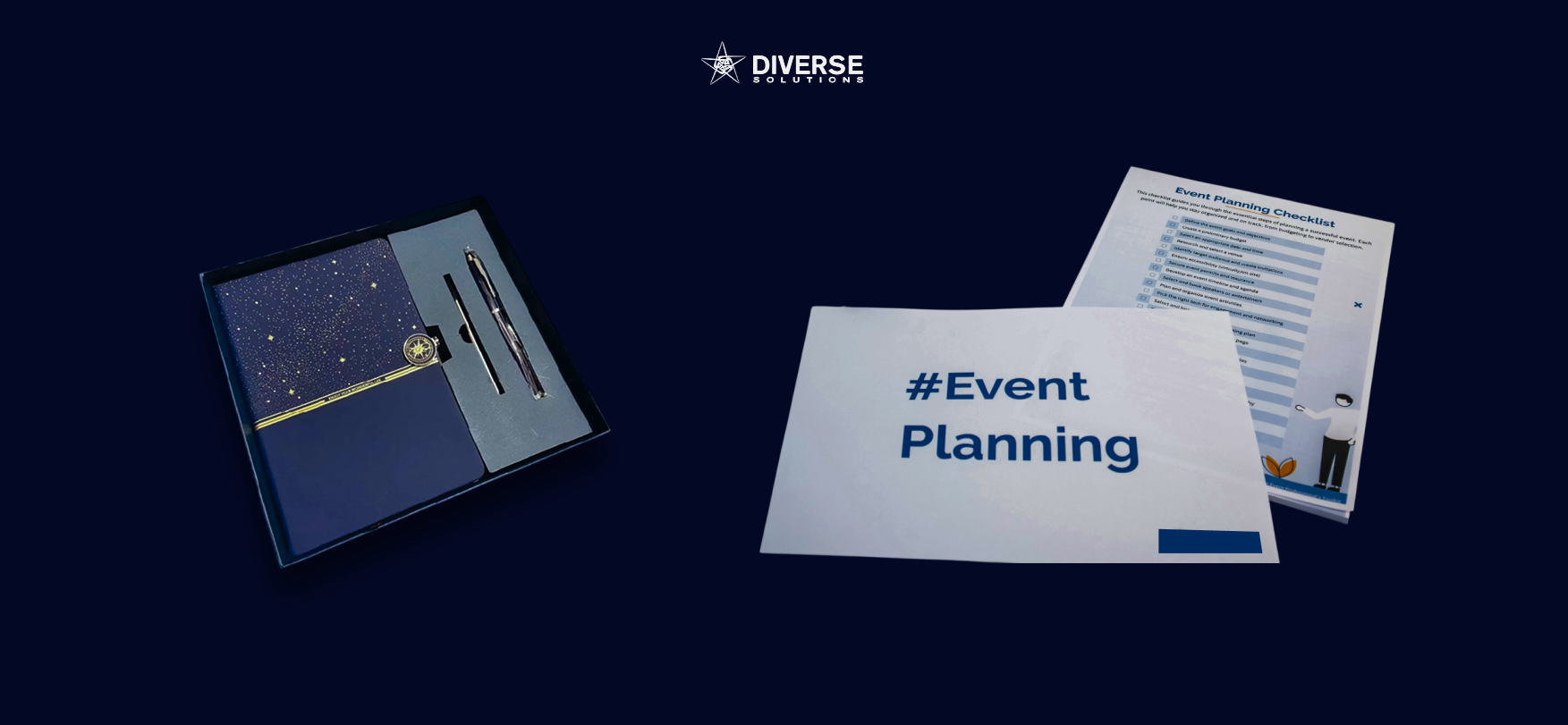
A campaign rarely falls short because the idea was weak. More often, it loses momentum because the materials around it were planned in fragments – one vendor for print, another for gifts, a rushed event setup, and digital assets that do not match what people see on the ground. A strong brand collateral planning guide helps prevent that disconnect by turning separate deliverables into one coordinated brand system.
For marketing teams, procurement leads, SME owners, and event organizers, the real challenge is not simply producing brochures, banners, corporate gifts, or presentation materials. It is deciding what to produce, when to produce it, how much to invest, and how each item supports a commercial objective. Good collateral should do more than look polished. It should support visibility, reinforce credibility, and make execution easier across every touchpoint.
What brand collateral planning actually covers
Brand collateral is often reduced to printed materials, but in practice it is much broader. It includes sales kits, brochures, flyers, product sheets, event booths, signage, wallpapers, presentation decks, welcome kits, branded merchandise, stationery, photography, packaging inserts, and even digital assets that support physical campaigns.
That range is exactly why planning matters. If each item is handled as a standalone request, the result is usually inconsistent messaging, repeated design work, avoidable rush charges, and excess stock that sits in storage. A proper plan creates structure before production begins.
The best approach starts with a simple question: what business result should these materials support? Sometimes the goal is lead generation at an exhibition. Sometimes it is employee onboarding, client retention, a new location launch, or an internal branding push. The answer changes the mix of collateral you need.
Start your brand collateral planning guide with business objectives
Teams often start with the item. They ask for a catalog, a tote bag, or a backdrop because it feels urgent. That is understandable, but it is not the most efficient path. A better sequence is objective first, asset second.
If the goal is event visibility, signage, booth graphics, directional materials, and giveaways may carry more weight than a detailed printed brochure. If the goal is supporting a sales team, presentation folders, product sheets, and leave-behind materials may perform better than novelty merchandise. If the goal is strengthening employer branding, onboarding kits, branded drinkware, desk items, and office visuals can create more impact than external advertising pieces.
This is where many organizations overspend. They produce a wide range of materials without deciding which pieces do the heaviest lifting. Planning sharpens priorities and helps budget flow toward the assets that matter most.
Match collateral to the stage of the customer journey
Not every item serves the same purpose. Some assets attract attention. Others explain value. Others reinforce trust after the first interaction.
At the awareness stage, visual impact matters. Banners, display systems, branded merchandise, window graphics, and social-ready design assets are useful because they increase recall quickly. In the consideration stage, buyers need clearer information, so brochures, capability decks, case-study sheets, and product catalogs become more important. At the decision stage, polished proposals, branded presentation materials, and professionally produced supporting documents can influence confidence in your business.
The trade-off is straightforward. High-visibility items create reach, but they do not always communicate detail. Information-heavy collateral can support conversion, but only if someone is already interested. A strong plan balances both.
Build consistency before you scale production
Consistency is not just a design issue. It affects cost, speed, and operational control. When brand guidelines are loose or scattered, every request becomes a fresh interpretation. Teams spend extra time approving colors, resizing logos, rewriting copy, and correcting layouts. The brand looks less stable, and production slows down.
A practical planning process should define the non-negotiables early: logo usage, approved colors, fonts, image style, tone of voice, key messaging, and format specifications. It should also establish who approves what. That sounds basic, but approval delays are one of the biggest causes of missed deadlines in collateral production.
Photography and copy matter here more than many companies expect. Strong visuals and clear language make printed and physical materials feel credible. Weak photography or generic wording can make even premium production look average. If a campaign includes multiple touchpoints, the visual and verbal standards should be set once and applied everywhere.
Think in systems, not isolated pieces
A brochure should not feel disconnected from a booth wall. A gift set should not carry a different tone than the launch deck. Event badges, backdrops, table displays, and follow-up materials should all feel like they came from one organization with a clear point of view.
That does not mean every item should look identical. Different formats require different treatments. A compact promotional item needs clarity and restraint, while a catalog can carry more detail. The key is coordinated variation, not repetition for its own sake.
Budgeting for collateral without wasting spend
A realistic brand collateral planning guide has to deal with budget discipline. Most organizations are not choosing between spending and not spending. They are deciding where spending creates measurable value.
One common mistake is splitting budgets too evenly across too many categories. Another is overcommitting to premium finishes on low-impact items while underinvesting in the materials that face customers directly. Good planning looks at visibility, frequency of use, shelf life, and audience value.
For example, event signage and branded backdrops often justify stronger production quality because they shape first impressions and are photographed repeatedly. Corporate gifts can also justify investment when they are tied to client retention, executive engagement, or milestone campaigns. On the other hand, short-life handouts for a one-day activation may not need premium finishes if the message is simple and the volume is high.
There is also a timing factor. Bulk production can improve unit economics, but only if the assets have a stable design life. If your messaging, offers, or team details change often, large quantities may create waste. In those cases, flexible print runs or modular materials make more sense.
Production timelines are part of the strategy
Many collateral problems begin with late planning. Teams finalize creative too close to an event or rollout date, then absorb rush fees, limited material options, and quality compromises. A campaign can still launch, but the finish often shows the strain.
A better planning model maps backward from the live date. That includes design development, copy approval, print proofing, production lead time, customization time for merchandise, packing, delivery, and contingency. The more touchpoints involved, the more valuable a single coordinated production schedule becomes.
This is especially important for organizations managing events, multi-location rollouts, employee kits, or campaigns with both physical and digital outputs. When one partner can align design, print, merchandise, signage, and supporting creative execution, the workflow becomes easier to control. That operational simplicity is not just convenient. It reduces risk.
A practical brand collateral planning guide for campaign types
Different campaign types call for different collateral mixes. Product launches often need stronger visual storytelling, display materials, promo items, and follow-up sales tools. Corporate events usually require registration materials, stage visuals, wayfinding, branded gifts, and post-event recap content. Recruitment campaigns may lean on employer branding assets, welcome kits, booth graphics, and social content support.
Institutional buyers and government-related projects often place higher emphasis on compliance, clarity, consistency, and dependable delivery. In those cases, process matters as much as creativity. Commercial brands may push harder on customization and standout presentation, but they still need execution discipline behind the scenes.
That is why planning should reflect not just audience but operating environment. A startup roadshow, a university event, and a formal procurement-driven campaign do not need the same production model.
Choose partners that reduce coordination load
Collateral planning is easier when strategy and execution are connected. If design, sourcing, printing, and delivery are fragmented across multiple vendors, the client team becomes the project manager by default. That can work for simple jobs, but it becomes expensive in time and oversight when campaigns are larger or recurring.
A one-stop partner brings a practical advantage: fewer handoffs, more consistent quality control, and better visibility across timelines and specifications. For buyers who are already balancing deadlines, budget controls, stakeholder approvals, and event logistics, that matters. Diverse Solutions Singapore has built its model around that reality – helping organizations move from concept to tangible brand assets without the friction of managing every piece separately.
Measure what worked before the next round
The final step is often skipped because teams move straight into the next campaign. Still, review matters. Which materials were actually used? What got positive feedback? What ran out too quickly? What sat untouched? Which item supported conversations, retention, or visibility better than expected?
Not every result is easy to quantify, but patterns emerge quickly when teams pay attention. You may find that a simple presentation folder closes more meetings than an expensive giveaway, or that branded drinkware performs better than generic event swag because it stays in use longer. Those insights make the next planning cycle sharper.
The strongest collateral programs are not built by ordering more. They are built by aligning message, format, timing, and execution with a clear business purpose. When that happens, every printed piece, branded gift, display, and support asset works harder – and your brand shows up with the consistency people remember.
