

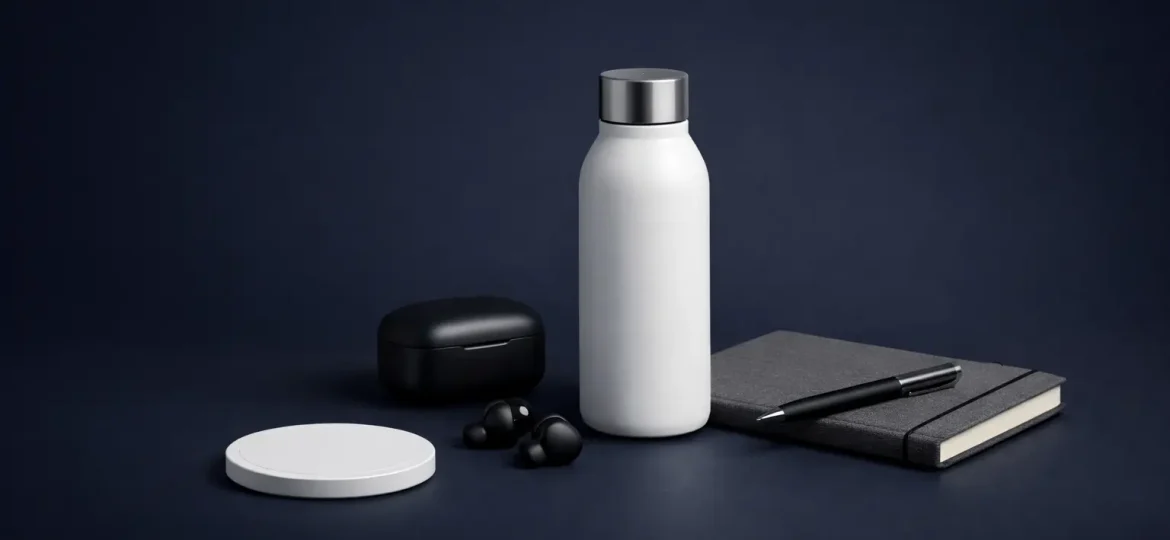
A giveaway can disappear into a drawer within a week, or become the item a recipient reaches for every morning. The difference is rarely the logo alone. Knowing how to choose promotional giveaways means connecting a useful object to a clear audience need, a specific brand message, and a well-managed delivery plan.
For marketing, HR, procurement, and event teams, merchandise is more than a finishing touch. It is a physical brand experience. It can welcome a new employee, make an event easier to navigate, reinforce a campaign theme, or keep a business visible long after a meeting ends. The strongest choices feel considered rather than generic.
Start With the Outcome, Not the Product
Before reviewing notebooks, drinkware, bags, tech accessories, or apparel, define what the giveaway needs to achieve. A recruitment event, a client appreciation initiative, a product launch, and an employee wellness program may all use branded merchandise, but they call for different decisions.
For example, an event giveaway may need to attract attention, be easy to carry, and support quick distribution. A corporate gift for long-term clients should place more emphasis on presentation, quality, and relevance to the relationship. Internal merchandise may be most effective when it encourages belonging, recognition, or participation in a company initiative.
A useful brief should identify the audience, occasion, key message, quantity range, required delivery date, and distribution method. It should also state what success looks like. Is the goal greater event engagement, better brand recall, a polished welcome experience, or stronger employee connection? This clarity prevents the common mistake of selecting an attractive item that has little strategic role.
Know Your Audience Before You Choose Promotional Giveaways
A promotional giveaway is only valuable when recipients see a place for it in their lives. That requires more than broad labels such as “clients” or “staff.” Consider their routines, working environments, interests, and the relationship they have with your organization.
An office-based audience may appreciate practical desk or commuting essentials. Participants at an outdoor event may value items that solve an immediate comfort or convenience issue. Students or new hires often respond well to products that support daily organization, learning, or orientation. Senior stakeholders may prefer a more refined, discreet item that reflects the significance of the engagement.
Relevance also includes cultural and situational context. In Singapore’s warm, mobile environment, a reusable bottle, umbrella, tote bag, or compact travel accessory may have repeated practical use. That does not make these products automatically right for every campaign. A well-chosen giveaway should feel connected to the recipient and the occasion, not merely familiar.
Ask these questions while shaping the selection:
- What would recipients genuinely use more than once?
- Where are they likely to use it: at work, while commuting, at home, or during an event?
- What impression should the item create: energetic, thoughtful, premium, practical, or innovative?
- Does the product suit the age group, role, and expectations of the audience?
- Will the item still be useful after the event or campaign has ended?
Match the Item to the Brand Experience
Promotional merchandise carries brand signals beyond the printed logo. Material, color, weight, finish, packaging, and usability all affect how recipients perceive the organization behind it. A poorly matched item can make even a well-designed logo feel like an afterthought. A relevant, well-produced item can reinforce professionalism with every use.
Start with your brand character. A creative brand may use distinctive colors, unexpected formats, or custom illustration. A corporate or government-facing organization may benefit from clean design, restrained color use, and products with dependable everyday function. Organizations with sustainability commitments should consider reusable or responsibly sourced options, while ensuring those claims and materials can be clearly substantiated.
Branding should be visible without making the item less desirable to use. On some products, a subtle mark creates a more polished result than a large logo. On others, such as event bags or campaign shirts, bolder graphics may be appropriate because visibility is part of the purpose. The right approach depends on whether the recipient is expected to use the item privately, professionally, or in public.
Customization matters here. A product can be adapted through color matching, logo placement, packaging, message cards, names, campaign artwork, or a coordinated set of items. These details turn standard merchandise into a coherent touchpoint that supports the wider brand system.
Balance Usefulness, Quality, and Visibility
There is usually a trade-off between an item’s immediate visual impact and its long-term usefulness. A novelty item may create a moment of interest at an activation, while a practical item may generate quieter but more sustained brand exposure. Neither is inherently better. The decision should follow the objective.
For a high-footfall event, compact products that are easy to distribute can help maximize reach. For a smaller group of priority guests, a more considered gift set may be a better reflection of the relationship. For internal initiatives, items that employees can integrate into their routine often support stronger adoption than one-off novelty pieces.
Quality should always be assessed in the context of use. A tote should carry weight comfortably. A bottle should have a reliable lid. Apparel should have appropriate sizing and a print method suited to the fabric. A technology-related accessory should be tested for compatibility and performance before it becomes part of a campaign. When a product fails in ordinary use, it does more than waste a distribution opportunity. It can undermine confidence in the brand.
Requesting samples or physical proofs is especially valuable for new product types, detailed artwork, exact color matching, and larger initiatives. It allows teams to check the product experience, not just approve a digital mockup.
Plan Distribution and Operations Early
Even the right giveaway can lose impact if it arrives late, is difficult to pack, or creates confusion on event day. Operational planning should be part of product selection from the beginning, particularly when multiple locations, recipient groups, or delivery dates are involved.
Consider the size and weight of the item, how it will be packed, whether individual names or kits are required, and where stock will be stored before distribution. Event teams should also consider how recipients will carry the item while moving through the venue. A large or fragile product may be appropriate for a scheduled corporate presentation but impractical for a busy exhibition floor.
Artwork approval, production lead time, quality checks, packing, and delivery all need room in the schedule. A late change in logo, quantity, or product specification can affect the final result. Bringing the production partner into the planning stage helps identify alternatives early if a preferred item is unsuitable for the timeline or intended application.
For organizations managing several campaign elements, a single coordinated partner can simplify the process. Merchandise, packaging, printed inserts, event collateral, and delivery can be planned as connected components rather than separate vendor tasks. This helps maintain consistency while reducing administrative pressure on internal teams.
Measure What Matters After Distribution
Not every promotional giveaway needs a formal return-on-investment calculation, but every significant initiative should have a way to assess effectiveness. The measurement should reflect the original objective.
At events, teams can track collection rates, booth conversations, registrations, or follow-up responses. For employee campaigns, participation levels and internal feedback can show whether the items added meaning to the initiative. For client gifting, account teams may observe response quality, meeting engagement, or whether the gift supported a timely business conversation.
Feedback also improves future selections. Ask a small group of recipients what they used, what they kept, and what they would prefer next time. Patterns will emerge. A product that seemed modest on paper may prove highly useful, while an eye-catching option may have limited practical value.
Make the Giveaway Part of a Larger Brand Moment
The best promotional items do not have to carry the entire campaign on their own. They work best when paired with a clear message, a thoughtful handover moment, and supporting brand materials. A welcome kit can introduce company culture. An event item can reinforce a theme. A client gift can arrive with a note that gives the gesture context and sincerity.
This is where professional execution matters. From concept and artwork through production, packing, and delivery, each decision shapes the recipient’s experience. Diverse Solutions helps organizations bring these elements together so promotional merchandise supports a consistent, useful, and credible brand presence.
Choose the item that your audience will be glad to receive, comfortable to use, and able to connect with your organization long after the handover. That is when a giveaway becomes a meaningful reminder rather than another item on the table.
