

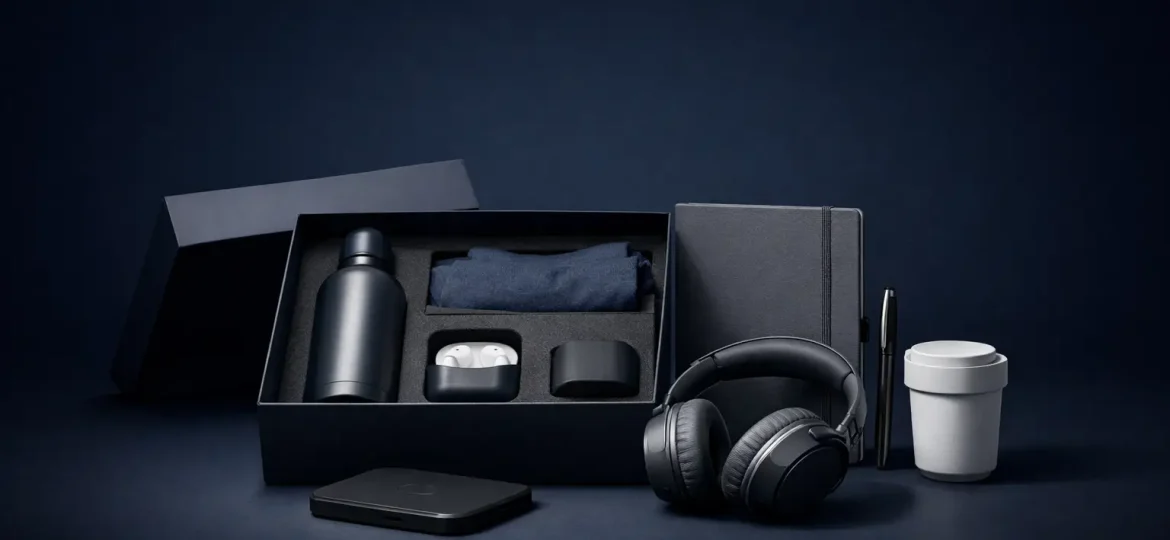
A new employee’s first day is full of small signals: whether their workstation is ready, whether the welcome feels personal, and whether they can start contributing without chasing basic supplies. The best employee onboarding merchandise supports that moment with useful, well-presented items that make people feel prepared and connected to the organization.
For HR, marketing, and procurement teams, an onboarding kit is not simply a collection of branded products. It is a practical brand experience. The right mix reinforces culture, reduces first-day friction, and gives every new hire a consistent introduction to the organization – whether they work in the office, remotely, or across multiple locations.
What Makes Onboarding Merchandise Worth Keeping?
The most effective onboarding merchandise earns a place in an employee’s working routine. A logo alone does not make an item valuable. Relevance, quality, design, and delivery all matter more than the number of products in the box.
Start with the employee’s first 30 days. What will they use while setting up their workspace, attending orientation, meeting colleagues, or traveling between work locations? A well-considered kit can answer those needs while carrying the organization’s visual identity in a restrained, professional way.
The strongest choices usually meet four requirements:
- Useful: The item solves a real workday need, rather than becoming desk clutter.
- On-brand: Colors, materials, packaging, and messaging reflect the organization’s established identity.
- Appropriate: The selection suits the role, work arrangement, and culture of the team.
- Well executed: Print quality, fit, packing, and delivery are consistent across every recipient.
A premium item that has little relevance to a new hire’s role may have less impact than a simple notebook, quality pen, and laptop accessory selected with care. The objective is not to impress through volume. It is to create a welcome that feels intentional.
Best Employee Onboarding Merchandise by Purpose
Everyday workspace essentials
Workspace essentials remain the foundation of most onboarding kits because they are immediately useful. A branded notebook and dependable pen support training sessions and early meetings. A desk organizer, mouse pad, cable management accessory, or laptop sleeve can help employees create an orderly workspace from the start.
For office-based teams, drinkware is often a practical addition. A durable tumbler or water bottle is used repeatedly throughout the workday and can be branded with a subtle logo treatment. The decision should reflect workplace habits. If employees commonly use shared pantry facilities, drinkware makes sense; if most travel between client sites, an insulated bottle may be the better fit.
Quality matters particularly with items employees handle every day. Uneven printing, weak zippers, or poorly finished materials can undermine the care that the welcome kit is meant to communicate.
Technology accessories for modern work
Many new employees begin their role by setting up devices, joining video calls, and accessing digital systems. Technology accessories can make that transition easier. Useful options include wireless charging pads, power banks, webcam covers, USB hubs, Bluetooth speakers, and compact phone stands.
Not every organization needs to include several technology items. A single well-selected accessory is often more effective than a collection of gadgets with overlapping functions. Consider the employee’s work environment and the equipment already issued by IT. A power bank may be highly relevant for sales or field teams, while a laptop stand may be more useful for hybrid employees working from home.
Before finalizing these items, confirm compatibility standards, approved specifications, and any information security requirements. Procurement and IT input early in the process prevents attractive merchandise from becoming impractical after delivery.
Apparel that builds belonging
Apparel can create a visible sense of belonging, especially during orientation programs, team gatherings, volunteer activities, and company events. T-shirts, polo shirts, jackets, caps, and tote bags are common options, but success depends heavily on fit, fabric, and design.
A garment should feel like something employees would choose to wear, not an obligation. Neutral colors, comfortable materials, inclusive sizing, and understated branding often have wider appeal than a large logo across the front. Where teams have differing roles or climates, it may be wiser to offer a choice between a lightweight layer, a polo, or another practical option.
Sizing introduces an operational consideration. Collecting sizes accurately, managing exchanges, and accounting for new starters who join after the main order require planning. For organizations with frequent hiring cycles, a stock program with selected core sizes can help maintain consistency without delaying onboarding.
Personal and culture-led touches
The most memorable onboarding kits include an element that feels human. This does not need to be expensive or elaborate. A welcome card signed by the hiring manager, a team introduction card, or a concise guide to company values can make branded merchandise feel connected to a real workplace culture.
Personalization can also be valuable when handled carefully. Adding a new hire’s name to a notebook, bottle, or welcome message creates a stronger sense of recognition. It works best when names and details are confirmed through a clear approval process, particularly for larger hiring programs.
Some organizations choose locally inspired products, wellness-focused items, or desk plants to reflect their culture. These can be meaningful choices, but they should align with the organization’s actual values and practical fulfillment capabilities. Perishable, fragile, or highly personal items can complicate delivery and may not suit every recipient.
Design the Kit Around the Employee Experience
A common mistake is treating onboarding merchandise as a branding exercise only. The better approach is to map the employee journey first, then select products that support it.
Think about what happens before day one, on day one, and during the first week. A pre-arrival package for a remote employee may need to include equipment accessories, a welcome message, and instructions for an orientation session. An office-based employee may benefit more from a ready workstation kit, access card holder, notebook, and drinkware placed at their desk.
The packaging should also match the experience. A branded box, mailer, or reusable tote can organize the contents and establish a polished first impression. However, packaging should not overwhelm the products inside. Practical, protective packaging with clean visual consistency is usually more valuable than overly elaborate presentation.
For organizations managing multiple departments or business units, create a core kit and a role-specific layer. The core kit may include universal branded essentials, while sales teams, technical staff, or event-facing employees receive additions suited to their work. This approach maintains brand consistency while recognizing that one size rarely fits every role.
Balance Brand Consistency With Individual Choice
Brand guidelines provide an essential foundation for onboarding merchandise, but rigid application can make a kit feel generic. The goal is to express the brand through thoughtful details, not to place a logo on every surface.
Use approved colors, typography, and logo placement consistently across the kit. Then introduce variety through materials and product choices. A refined logo on a quality notebook, a color-matched laptop sleeve, and a welcome card written in the organization’s voice can create a cohesive result without visual overload.
Choice is especially helpful for apparel and lifestyle products. A simple selection form can allow employees to choose a preferred color, size, or item category within an approved range. This reduces waste and increases the likelihood that the merchandise will be used. It does add administrative steps, so it is best suited to programs with sufficient lead time and a clear fulfillment process.
Plan Fulfillment Before Approving the Products
Onboarding programs often involve rolling start dates, confidential employee information, changing office locations, and remote delivery. These details can determine whether a welcome kit arrives as a positive first impression or an avoidable operational problem.
Build a process that covers approved artwork, item specifications, stock levels, name personalization, packing standards, address verification, and delivery timing. Assign clear ownership between HR, procurement, marketing, and the fulfillment partner. This is particularly important when onboarding occurs across departments or when kits need to reach employees before their first day.
It is also useful to retain a small buffer of core products. New hires do not always start according to a fixed schedule, and replacement items may be needed. A well-managed inventory plan helps maintain quality and avoids last-minute substitutions that dilute the intended experience.
Diverse Solutions Singapore supports organizations by bringing creative development, branded merchandise production, packaging, and delivery coordination into one managed process. For teams balancing brand standards with onboarding deadlines, this can reduce vendor coordination while keeping the welcome experience consistent.
Measure What Employees Actually Use
Employee feedback is one of the clearest ways to improve future onboarding kits. Ask new hires which items they used most during their first month, which products felt less relevant, and whether the kit helped them feel prepared. Managers can also share observations about what employees bring to meetings, use at their desks, or wear at team activities.
Usage matters more than novelty. If a particular item consistently remains unopened, reconsider its place in the kit. If employees regularly mention a simple but useful product, that is a strong indicator of value. Over time, these insights can help organizations refine their merchandise selection, reduce unnecessary items, and invest in a more meaningful welcome.
A thoughtful onboarding kit tells a new employee that the organization planned for their arrival. When every item has a purpose and every detail reflects the brand with care, merchandise becomes more than a welcome gift – it becomes an early example of how the organization works.
