

A rushed giveaway decision usually shows up after the event, not during it. Boxes of leftover items, inconsistent branding, and gifts that never make it past the registration desk can quietly reduce the value of an otherwise well-run program. That is why choosing the best event giveaways for professionals deserves more thought than simply picking what is popular.
For business events, the right giveaway does more than fill a swag bag. It should support your brand positioning, feel relevant to the audience, and fit the setting – whether that is a conference, client appreciation event, executive seminar, recruitment fair, or internal company function. Professionals are quick to notice quality, usefulness, and presentation. They are equally quick to ignore items that feel generic.
What makes the best event giveaways for professionals
The best giveaways usually share three traits. First, they are practical enough to be used after the event. Second, they reflect your brand in a polished way rather than forcing a logo onto an unrelated product. Third, they match the context of the audience.
A procurement leader at an industry forum, for example, may appreciate something functional for work travel or daily meetings. An HR team organizing an employee appreciation event may need gifts that feel inclusive, presentable, and easy to distribute at scale. A university or government event may place more emphasis on utility, professionalism, and consistency across departments.
This is where many organizations run into a trade-off. A highly creative item may get attention at the booth, but if it has little long-term use, the branding value fades quickly. On the other hand, a very practical item can be effective for brand recall, but only if the design, finish, and packaging feel intentional.
12 best event giveaways for professionals
1. Premium notebooks
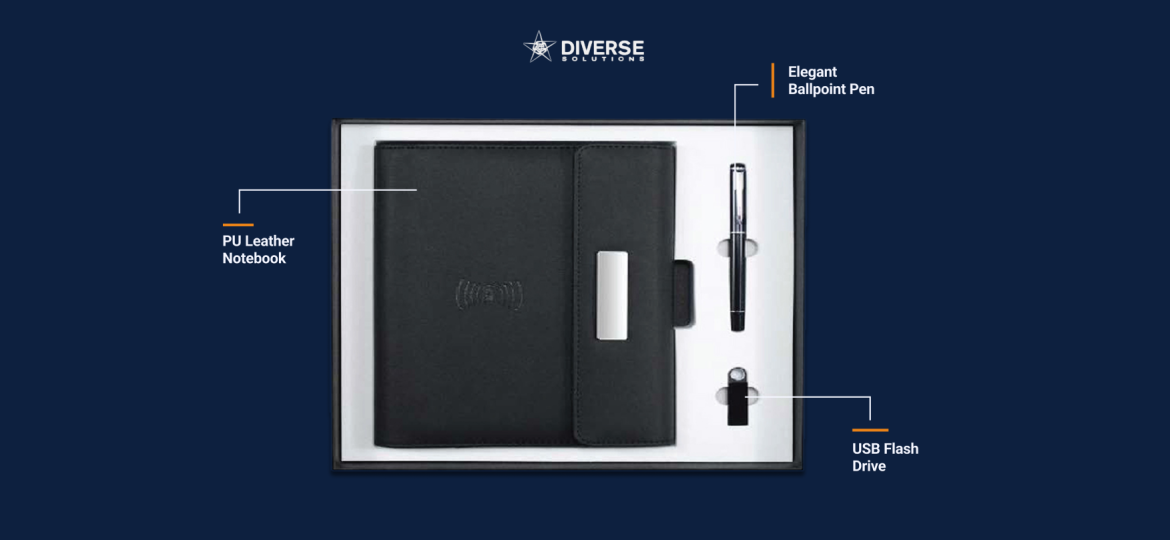
A well-made notebook remains one of the most reliable professional giveaways because it works across industries and event types. It is useful in meetings, training sessions, conferences, and client visits. The key difference is in execution. A sturdy cover, clean branding, and good paper quality make it feel like a business tool rather than event filler.
This option works especially well when you want broad appeal without looking generic. It also pairs naturally with printed inserts, event agendas, or branded sleeves for a more complete presentation.
2. Executive pens
Pens are common, but that does not make them ineffective. In professional settings, a good pen still signals practicality and polish. The issue is quality. Lightweight pens with inconsistent ink or overly flashy branding tend to disappear into the category of forgettable merchandise.
A metal or soft-touch finish with subtle logo placement usually performs better for corporate audiences. It is a small item, but when selected carefully, it supports a more refined brand impression.
3. Wireless chargers
Wireless chargers are one of the stronger choices for modern business audiences because they align with daily work habits. People use them at desks, in meeting rooms, and at home offices. That repeated exposure gives your brand more staying power than a novelty item used once.
This choice is best for organizations that want a more contemporary, tech-forward image. It does require attention to compatibility, packaging, and product quality, so planning matters.
4. Branded tote bags with structure
A tote bag becomes far more valuable when it is durable, well-sized, and professionally designed. Structured tote bags work particularly well at conferences and seminars where attendees are carrying documents, devices, or event materials.
The caution here is that tote bags are often overused. If you choose this route, material, stitching, and layout need to do the work. A bag that looks corporate and feels durable has a much better chance of being reused.
5. Reusable drinkware
Tumblers, insulated bottles, and travel mugs consistently rank among the best event giveaways for professionals because they fit both office and commuting routines. They also give brands a larger surface area for tasteful design.
This category works well when you want to position your organization as practical and quality-conscious. The trade-off is that poor finishing, leakage issues, or oversized branding can quickly reduce perceived value.
6. Laptop sleeves or tech pouches
For audiences that travel, present frequently, or attend multiple meetings, laptop sleeves and tech organizers can be highly relevant. These are especially suitable for executive events, client gifting, staff onboarding kits, and premium conference packs.
They tend to feel more considered than standard swag, which can help your organization stand out. At the same time, sizing, material quality, and brand placement should be handled carefully to avoid a bulky or awkward result.
7. Desk organizers
A compact desk organizer, cable holder, or multifunction office accessory can work well when your audience is likely to use it throughout the workweek. These items support visibility in a professional environment without being disruptive or overly promotional.
They are most effective when the design is clean and contemporary. If the product feels too gimmicky, it can miss the mark with a business audience.
8. RFID card holders or card wallets
Slim card holders appeal to professionals because they are portable, practical, and easy to distribute at events. They also suit industries where attendees move between meetings, venues, and networking sessions.
This category is a good middle ground between utility and presentation. It feels more elevated than a basic stationery item while remaining broadly usable.
9. USB hubs or charging cables
Tech accessories continue to perform well because they solve small but frequent workplace frustrations. A compact USB hub or quality charging cable can become part of a daily setup, which increases brand exposure over time.
These items are particularly suitable for trade shows, technology events, and B2B programs where attendees value functionality. As with other tech products, reliability matters more than novelty.
10. Branded apparel with restraint
Apparel can work for professional audiences, but only when approached carefully. Simple polo shirts, lightweight jackets, or understated caps can be useful for staff events, volunteer programs, educational institutions, or team-based functions.
For external audiences, apparel is more selective. People are less likely to wear heavily branded clothing unless the fit, quality, and design are genuinely appealing. This is one of the clearest examples of where customization and audience understanding matter.
11. Event kits with coordinated essentials
Sometimes the strongest giveaway is not a single item but a curated kit. A notebook, pen, badge holder, and drinkware item presented in coordinated packaging can create a more complete brand experience than distributing separate pieces.
This approach works well for onboarding events, leadership meetings, internal conferences, and stakeholder programs. It also helps organizations maintain consistency across multiple event touchpoints, which is often more valuable than chasing attention with one-off items.
12. Custom gifts tied to the event purpose
The most effective giveaway is often the one designed around the event objective rather than a trend. A recruitment event may call for practical campus-friendly items. A client seminar may require something more premium and executive. An employee engagement event may benefit from a more personal and inclusive mix.
This is where a strategic branding partner adds value. When concept, design, production, and delivery are coordinated from the start, the giveaway becomes part of the event experience rather than an afterthought.
How to choose the right giveaway for your event
Start with the audience, not the catalog. Ask what your attendees are likely to use in the days and weeks after the event. A practical item that fits their routine will usually outperform a more eye-catching product with limited relevance.
Next, consider the role of the giveaway in the larger brand experience. Is it meant to attract booth traffic, support a premium event impression, reinforce an internal campaign, or extend brand recall after the event ends? The answer should influence not just the item, but also the packaging, message, and level of customization.
It is also worth thinking about distribution. Some products are easy to hand out at scale. Others are better reserved for VIP guests, speakers, employees, or qualified leads. When organizations skip this step, they often end up with gifts that are either mismatched to the audience or difficult to manage operationally.
Why execution matters as much as the product
Even the best giveaway can lose impact if the branding is inconsistent, the print quality is poor, or the delivery timeline creates last-minute compromises. For many event teams, the challenge is not a lack of product options. It is coordinating design, approvals, production, and logistics without adding more vendor complexity.
That is why giveaway planning works best when it sits inside a broader event and branding strategy. A reliable partner can help align product selection with your audience, visual identity, event format, and operational needs. For organizations managing multiple stakeholders, departments, or deadlines, that coordination often matters just as much as the item itself.
Diverse Solutions Singapore works with organizations that need that balance of creativity, quality, and dependable execution across branded merchandise, event support, and business solutions. The advantage is not simply access to products. It is having a partner that can help turn a giveaway into a more consistent brand touchpoint.
The best event giveaway is rarely the loudest item on the table. It is the one that people keep, use, and associate with a professional experience long after the event has ended.
