

A generic hamper may check the gifting box, but it rarely strengthens a business relationship. The best client appreciation gift ideas do more than look presentable – they reflect your brand standards, acknowledge the client’s value, and arrive with the right level of polish.
For marketing teams, procurement leads, business owners, and event organizers, that balance matters. A client gift has to feel thoughtful without becoming awkward, branded without looking overly promotional, and practical enough that it does not end up forgotten in a drawer. When chosen well, it becomes a small but effective brand touchpoint.
What makes client appreciation gift ideas effective
A strong client gift sits at the intersection of usefulness, presentation, and timing. If the item is attractive but not usable, it may earn a quick thank you and nothing more. If it is useful but poorly presented, it can feel transactional. The most effective gifts support everyday routines while quietly reinforcing professionalism.
Context matters too. A year-end appreciation campaign calls for a different approach than an event giveaway or a milestone thank-you. High-value clients may warrant a more premium finish, while larger-scale gifting programs often need consistency, budget control, and fast fulfillment. This is where planning matters as much as the product itself.
The safest rule is simple: choose something your client can genuinely use, elevate it with thoughtful branding, and make sure the delivery experience matches the quality of the item.
17 client appreciation gift ideas for modern businesses
1. Premium drinkware
Tumblers, insulated bottles, and ceramic mugs remain reliable because they fit into daily work life. Good drinkware travels between office desks, meetings, cars, and home setups, giving your brand repeated visibility without forcing attention.
This category works especially well when you invest in finish quality. A clean logo placement, modern color choice, and sturdy packaging can turn a standard bottle into a professional gift. Cheap drinkware, on the other hand, is easy to spot and can weaken the message.
2. Desk essentials with a polished finish
Notebooks, pen sets, wireless chargers, mouse pads, and desktop organizers are practical choices for clients who spend most of their day at a workstation. These items feel business-appropriate and easy to distribute across different client segments.
The trade-off is that desk gifts can become generic if there is no clear point of difference. Better materials, coordinated branding, or bundling several items into a compact gift set can make them feel more intentional.
3. Tech accessories
Portable chargers, charging cables, laptop sleeves, webcam covers, and Bluetooth accessories continue to perform well because they solve common workday frustrations. They also suit industries where mobility, travel, and hybrid work are part of daily operations.
This is a category where quality control matters a great deal. A poorly made tech item creates the wrong impression quickly, so it is worth sourcing products that feel dependable and professionally finished.
4. Curated snack or beverage sets
Food and beverage gifts can create a warmer, more personal experience, especially during festive periods or after a successful project. Coffee sets, tea collections, gourmet snacks, or premium treats can feel generous without becoming overly extravagant.
That said, these gifts are short-lived. They create a moment rather than a lasting brand asset, so they are often most effective when paired with a reusable branded item such as a mug or tumbler.
5. Branded gift boxes
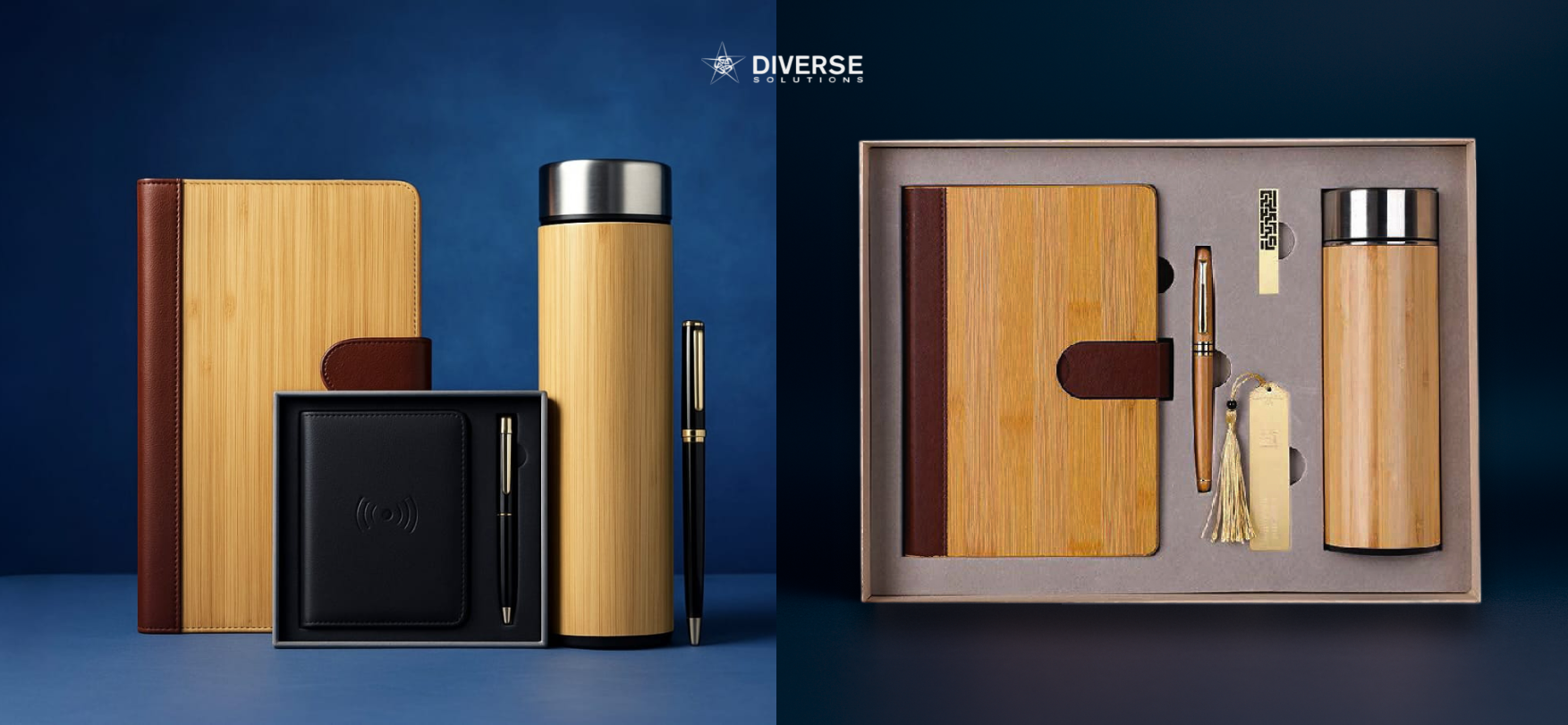
A gift box allows you to combine several smaller items into one cohesive experience. For example, drinkware, stationery, and snacks can be packaged together in a way that feels more premium than giving each item separately.
This approach is especially effective for onboarding, holiday campaigns, or client milestone gifts. It also gives you more flexibility to tailor value levels based on client tiers while keeping your visual presentation consistent.
6. Travel-friendly items
Luggage tags, passport holders, travel pouches, neck pillows, and compact organizers work well for clients who travel often for meetings, conferences, or regional operations. These gifts can feel smart and relevant rather than decorative.
The key is knowing your audience. If your client base is mostly office-bound, travel gifts may miss the mark. If they are frequently on the move, they can be a strong fit.
7. Eco-conscious products
Reusable cutlery sets, recycled notebooks, bamboo accessories, and tote bags made from sustainable materials appeal to organizations that want gifting to reflect broader corporate values. They can also support ESG-minded campaigns or event themes.
The caution here is authenticity. If sustainability is part of your message, the product choice, materials, and print method should support that claim rather than feel like surface-level marketing.
8. Everyday bags and pouches
Tote bags, laptop bags, document sleeves, and zip pouches are useful across industries. They offer generous branding space and can be styled to look corporate, creative, or event-focused depending on your audience.
A well-designed bag can become part of a client’s routine. A flimsy one becomes clutter. Material and construction make all the difference.
9. Calendar and planner sets
Planners, desktop calendars, and scheduling tools are practical gifts for year-end campaigns and new-year launches. They align naturally with planning, goal setting, and fresh starts.
This category is timing-sensitive, so production and delivery need to be organized well in advance. Miss the window, and the relevance drops quickly.
10. Wellness-focused gifts
Aromatherapy items, mini massagers, eye masks, or simple wellness kits can feel thoughtful when positioned appropriately. These work best for internal culture campaigns, event gifting, or client segments where lifestyle branding is relevant.
For more formal sectors, wellness gifts can still work, but they should be selected carefully to maintain a professional tone.
11. Premium writing instruments
A good pen still carries weight in business settings. It is understated, practical, and easy to present as a professional token of appreciation.
This is one of the better options when you need something elegant, compact, and suitable for meetings, ceremonies, or executive gifting. It does not need to be flashy to feel premium.
12. Custom apparel with restraint
Polos, jackets, caps, or lightweight outerwear can work well if your clients are part of communities, events, field operations, or active corporate programs. Apparel has strong visibility, but only when the design feels wearable.
Large logos often reduce appeal. A subtle, well-placed mark usually performs better than overt branding.
13. Event-based appreciation kits
If you are hosting conferences, launches, or appreciation events, a coordinated gift kit can tie the experience together. This may include a badge holder, notebook, bottle, pen, and event insert packaged in a way that feels unified.
The value here is not only in the items themselves but in the consistency of the overall presentation. It shows operational control and brand cohesion.
14. Seasonal gifts with business relevance
Holiday gifts remain popular because they fit natural appreciation moments. The strongest versions avoid being too generic by combining seasonal warmth with practical use.
For example, a holiday snack set paired with branded drinkware tends to land better than a purely decorative festive item.
15. Customized office accessories
Nameplate-style desk pieces, premium folders, meeting folios, or presentation accessories can be effective for long-term clients in corporate environments. These items signal professionalism and are often used in client-facing contexts.
They are less universal than drinkware or tech accessories, but they can feel more tailored when the fit is right.
16. Mini luxury items
Compact premium gifts such as leather card holders, elegant key organizers, or high-end notebooks can create a stronger sense of exclusivity. These are best reserved for top-tier clients, board-level contacts, or milestone accounts.
The challenge is scale. They may not suit large-volume campaigns, but for selective relationship building, they can be very effective.
17. Fully customized appreciation sets
Sometimes the best option is not a single item but a tailored collection built around your client profile, campaign objective, and delivery timeline. This gives you more control over budget, presentation, and brand consistency.
For organizations managing gifting alongside print materials, event support, or campaign assets, a one-stop execution model can make the process far more efficient. Diverse Solutions Singapore is often selected for this reason – not just for product sourcing, but for customization, packaging, creative alignment, and dependable delivery across multiple touchpoints.
How to choose the right gift for the right client
The best choice depends on what you are trying to achieve. If the goal is broad relationship maintenance across many accounts, practical items with universal appeal usually perform best. If the goal is to recognize premium clients or celebrate a major milestone, presentation and perceived value become more important.
Industry also plays a role. A creative agency client may appreciate stylish, design-forward merchandise, while a government or institutional stakeholder may prefer something classic, useful, and understated. Company culture matters as well. Some clients enjoy casual, lifestyle-oriented gifts. Others expect a more formal standard.
Budget should guide the strategy, not weaken it. A modest but well-executed gift often performs better than an expensive item with weak branding or rushed packaging. The most successful programs are usually clear in purpose from the start.
Common mistakes that weaken client gifting
One common mistake is over-branding. If your logo dominates the product, it can feel more like advertising than appreciation. Another is choosing novelty over usefulness. A clever idea may get a quick reaction, but practical items tend to stay in circulation longer.
Late delivery is another avoidable issue. Even a premium gift loses impact if it arrives after the occasion has passed. That is why production planning, stock availability, and packaging decisions should be made early, especially for year-end campaigns and events.
There is also the question of compliance. Some organizations have policies around gift values or categories. When gifting corporate clients, it is wise to keep selections professional, appropriately priced, and easy to justify.
Presentation is part of the gift
A client rarely separates the item from the experience of receiving it. Packaging, print quality, insert cards, color coordination, and even carton condition all shape perception. A simple product can feel premium when the presentation is handled properly.
This is where execution matters. When your gift, printed message, event collateral, and supporting brand materials are aligned, the result feels intentional. That consistency builds trust because it shows your business pays attention to details that clients notice.
A good client gift does not need to be extravagant. It needs to be well chosen, well branded, and well delivered. If it fits your client’s world and reflects your standards, it keeps working long after the handoff.
