

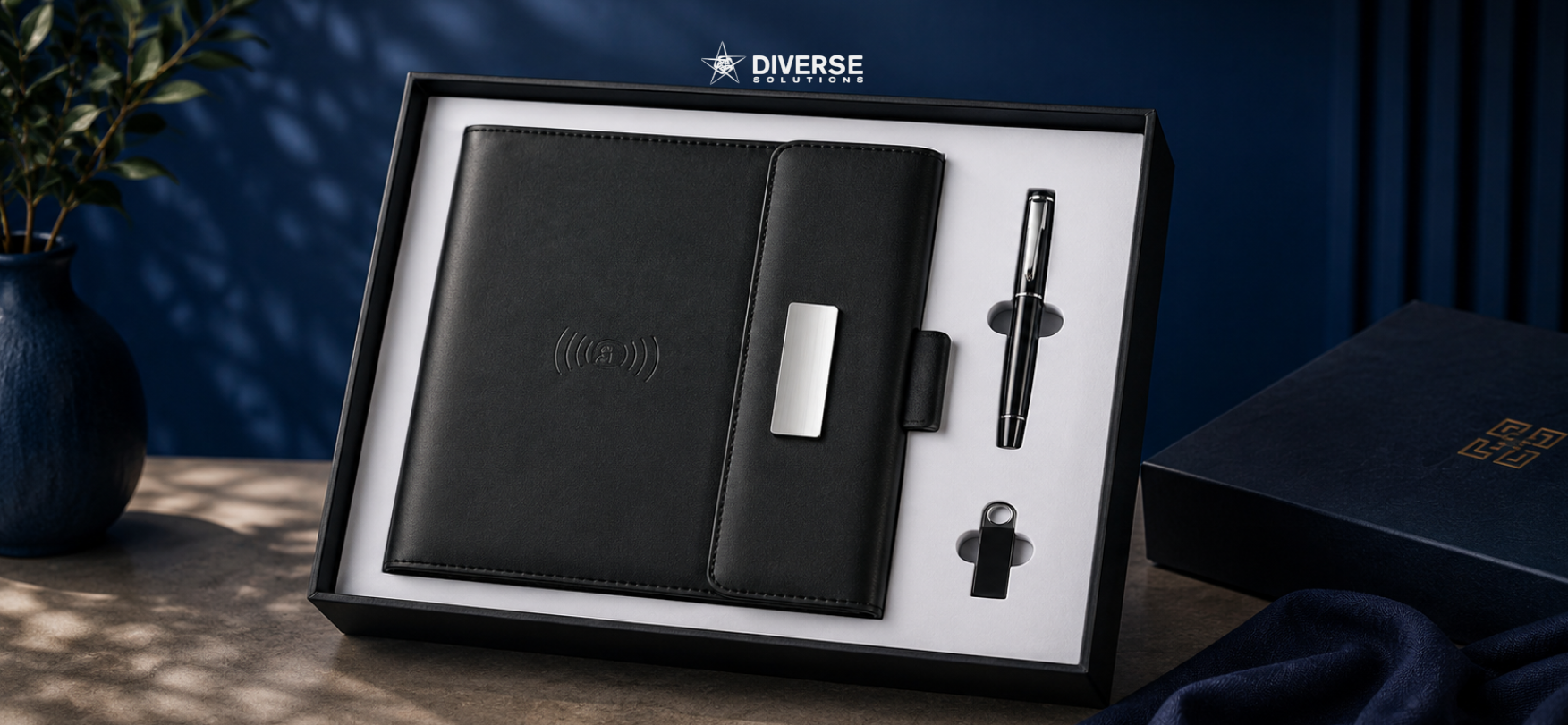
The first day tells employees what kind of company they joined long before HR finishes the orientation deck. A desk that is ready, a laptop that works, and custom welcome kits for new hires that feel thoughtful instead of generic can shape confidence from the start. For growing companies, institutions, and enterprise teams, that first impression is not a small detail. It is part of the employer brand.
A strong welcome kit does two jobs at once. It helps a new employee settle in, and it reinforces how the organization presents itself internally. When those kits are planned well, they signal preparation, consistency, and care. When they are rushed, filled with random items, or detached from the company’s identity, they do the opposite.
Why custom welcome kits for new hires matter
Most onboarding conversations focus on systems, paperwork, and training schedules. Those are necessary, but they are not the full experience. New hires are also forming quick judgments about culture, standards, and whether the company delivers on what it promises.
A custom welcome kit gives that experience a physical form. It can make a remote employee feel included, help a campus recruit feel chosen, or support a large intake program with consistent presentation across departments. For HR and procurement teams, it also solves a practical problem. Instead of assembling ad hoc items for every hire, the organization can standardize what is included, align branding, and manage quantity more efficiently.
There is also a retention angle. A welcome kit will not compensate for poor management or unclear role design, but it can contribute to a stronger start. Employees remember whether their arrival felt prepared. They notice whether the company invested in the details.
What makes a welcome kit effective
The best kits are useful first and branded second. That distinction matters. If every item feels like a promotional giveaway, the kit looks more like event merchandise than a serious onboarding tool. Branding should support the experience, not overpower it.
A well-built kit usually combines daily-use essentials with a few items that reflect company personality. Think drinkware, notebooks, pens, tech accessories, apparel, ID holders, desk items, or printed materials that help orient the employee. Packaging also matters. A clean presentation box, printed insert, or branded folder can elevate the entire experience without requiring premium spend on every single item.
Relevance should guide selection. A field operations team needs different items than a hybrid software team. A university onboarding program has different requirements than a bank or healthcare group. The smartest approach is not to create one universal box and force it across every function. It is to create a core kit with optional variations.
Start with purpose before product selection
Before choosing materials, colors, or item counts, define what the kit needs to achieve. Some companies want it to support culture and employer branding. Others want it to improve onboarding consistency across multiple locations. Some are hiring at scale and need speed, stock availability, and straightforward fulfillment.
That purpose affects every decision. If culture is the priority, storytelling elements such as a founder note, values card, or department-specific insert may carry more value than adding another branded item. If operational efficiency is the priority, ready-stock items with clean customization options may be the smarter route. Then if the workforce is remote, shipping durability and compact packaging become more important than a large-format presentation.
This is where experienced execution matters. A good supplier is not just printing logos on products. They are helping the buyer balance budget, brand presentation, lead time, quantity, and practicality.
Choosing the right items for custom welcome kits for new hires
There is no perfect universal checklist, but there are smart categories to work from. Everyday desk essentials tend to perform well because they are used often and remain visible. Notebooks, pens, mugs, tumblers, lanyards, and laptop sleeves are common for a reason. They are functional, easy to brand, and suitable across many industries.
Tech items can add perceived value, but they need careful handling. A wireless charger or USB hub may be appreciated by a hybrid team, yet these products can also increase costs and require more attention to compatibility and quality. If the budget is tight, a premium notebook with excellent packaging may create a better impression than a low-grade gadget.
Apparel can work well when sizing and style are managed properly. A quality polo or tee can support belonging, especially in team-based environments or during orientation events. But apparel also creates complexity in inventory planning. If you are onboarding employees in different regions or in unpredictable batch sizes, flexible merchandise may be easier to manage.
Printed materials are often underestimated. A welcome letter, brand card, benefits overview, office guide, or first-week checklist gives the kit structure. These pieces also help turn a box of items into a coordinated onboarding experience.
Design should reflect brand standards, not just add a logo
A welcome kit is a brand asset. That means visual consistency matters. Colors, packaging, print quality, and messaging should feel aligned with the organization’s broader identity. If your company is polished and premium in the market, the onboarding kit should not feel cheap or mismatched. If your culture is energetic and creative, the design should reflect that without losing professionalism.
This is where many kits fall short. Buyers often source products from one vendor, packaging from another, printed inserts from a third, and then try to assemble everything internally. The result can feel fragmented. Working with one capable production partner reduces that risk because product sourcing, design adaptation, print execution, and packing standards can be aligned from the start.
For larger organizations, approval workflows also matter. Brand teams, HR, procurement, and sometimes operations all have input. A streamlined vendor process can save time by centralizing mockups, item recommendations, substitutions, and production scheduling.
Budget, quantity, and quality trade-offs
Not every organization needs a high-cost welcome box, and spending more does not automatically create a stronger result. The key is matching the kit to hiring volume, role level, and business objective.
If you are hiring in large batches, consistency and replenishment may matter more than premium materials. If you are building kits for management hires, campus ambassadors, or hard-to-recruit specialist roles, a more elevated presentation may make sense. It depends on who the kit is for and what impression the company wants to create.
There are practical trade-offs to weigh. Premium customization methods improve appearance but may extend lead times. Imported products may expand options but reduce flexibility if onboarding schedules shift. Highly personalized names or role-specific inserts look impressive, but they can complicate packing and increase error risk.
A commercially sound plan usually includes a standardized base kit, a realistic budget tier, and backup options in case stock changes. That is how organizations avoid the scramble that comes with last-minute hires.
Fulfillment matters as much as the kit itself
An excellent kit delivered late loses much of its value. Timing is part of the experience. New hires should receive their materials on or before day one, not weeks later after reminders and internal follow-up.
This is especially important for organizations with multiple offices, hybrid teams, or regional hiring. Storage, packing, kitting, and delivery need to be planned early. If internal teams are handling this manually, the workload can become significant fast.
A one-stop partner with merchandise, print, packaging, and production coordination under one roof can make a visible difference here. Diverse Solutions Singapore, for example, serves organizations that want customization and operational reliability in the same workflow. That model is especially useful when welcome kits need to support broader employer branding materials, launch campaigns, event onboarding, or printed orientation assets at the same time.
Common mistakes to avoid
The most common mistake is treating the kit as an afterthought. When it is assembled too late, buyers usually end up choosing whatever is available instead of what fits the brand. The second mistake is overloading the box with low-value items. More products do not always create more impact.
Another issue is ignoring the employee experience. A beautiful box that contains little of practical use will not carry long-term value. On the other hand, a modest kit with well-chosen items, clear messaging, and solid presentation can feel highly professional.
It is also worth avoiding over-customization unless the process can support it. Personalized kits sound appealing, but if they create delays or packing errors, they can undermine the very impression they were meant to improve.
Build a kit that can grow with your organization
The best onboarding kits are not one-off projects. They are repeatable programs. That means documenting approved items, defining packaging standards, setting quantity thresholds, and reviewing performance over time.
As hiring needs change, the kit can evolve. You may add role-based variants, seasonal updates, or event-specific inserts. You may simplify for scale or upgrade for key talent groups. What matters is creating a system that supports your brand consistently without creating unnecessary internal work.
A new hire may not remember every orientation slide. They will remember whether the company looked prepared, whether the presentation felt intentional, and whether the brand matched the promise. Custom welcome kits for new hires do not need to be extravagant to achieve that. They need to be useful, well executed, and delivered with the same professionalism your organization wants to be known for.
