

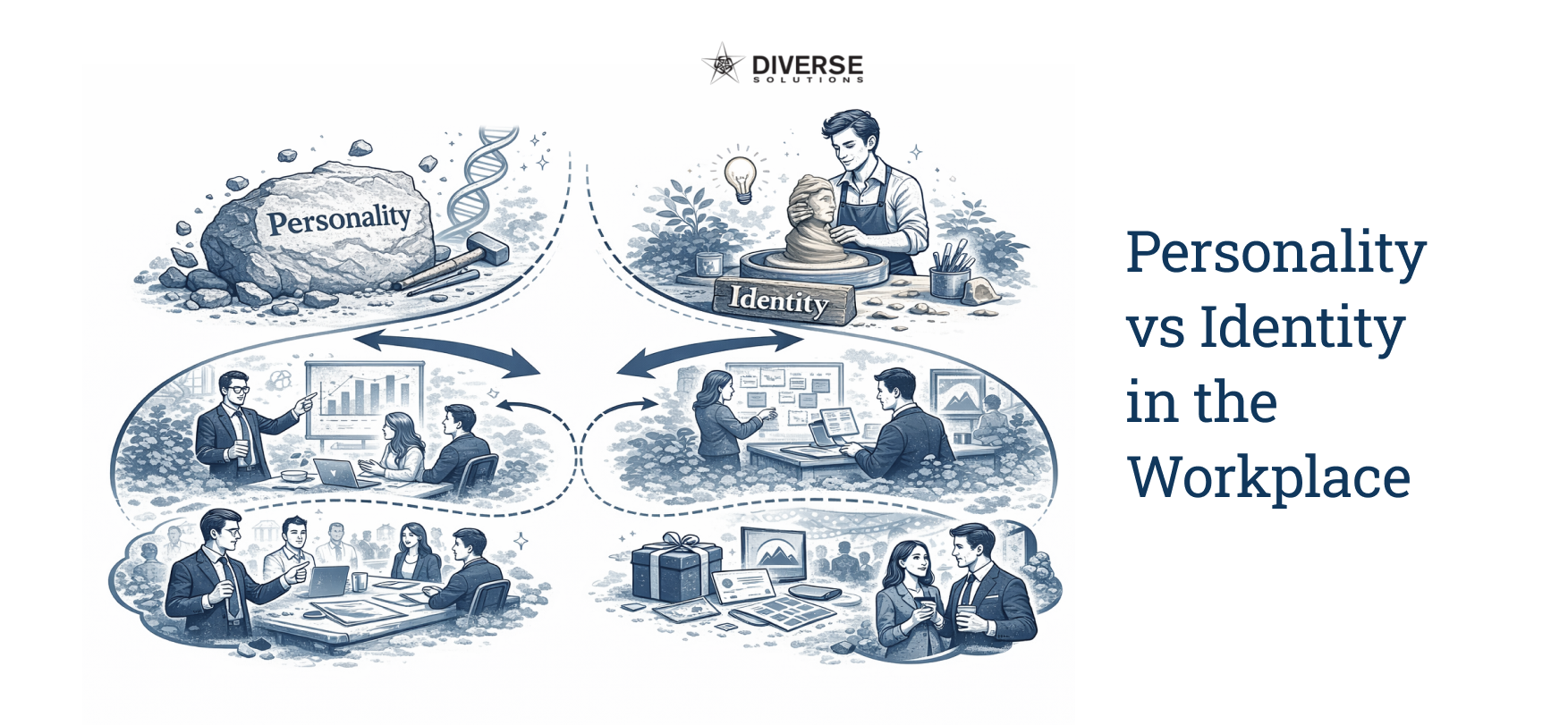
Personality vs Identity. You Don’t Need to Change Who You Are
Many professionals believe growth requires changing their personality—becoming more outgoing, more analytical, or more confident.
But what if that’s the wrong approach?
In organizational behavior, personality consider to be relatively stable—like a foundation from genetics and early experiences. Identity, however, is flexible. It evolves based on how we act, learn, and present ourselves over time.
This distinction is critical. Because real growth doesn’t come from changing who you are—it comes from shaping how you show up.
What Is the Difference Between Personality VS Identity?
Personality: The Stable Foundation
Personality refers to consistent patterns in how individuals think, feel, and behave. It is:
- Relatively stable over time
- Influenced by heredity and environment
- The baseline of how we naturally respond to situations
Think of personality as the foundation you build on—not something you constantly rebuild.
Identity: The Evolving Expression
Identity is how you define and express yourself in different contexts. It is:
- Constructed and continuously evolving
- Influenced by experiences, roles, and environments
- Actively shaped through actions and decisions
Unlike personality, identity is dynamic. It adapts as you grow professionally and personally.
Why This Matters in the Workplace
Understanding the difference between personality and identity can transform how individuals and organizations approach development.
-
Growth Becomes More Realistic
Instead of trying to “fix” personality traits, professionals can focus on developing behaviors and skills that align with their goals.
For example:
- An introvert doesn’t need to become extroverted to lead effectively
- A creative thinker can build structure without losing originality
- A detail-oriented employee can learn strategic thinking over time
-
Teams Become More Effective
When organizations recognize that people process information and behave differently, they can:
- Assign roles more strategically
- Improve collaboration across diverse working styles
- Reduce misunderstandings caused by different communication preferences
-
Professional Identity Becomes Intentional
High-performing individuals don’t leave their identity to chance. They actively shape how they are perceived:
- How they communicate
- How they present ideas
- How they engage with others
Identity becomes a strategic tool—not just a byproduct.
From Individuals to Brands: The Same Principle Applies
The concept of personality vs identity extends beyond individuals—it also applies to organizations and brands.
A company’s core values (its “personality”) remain consistent.
But how those values are expressed (its “identity”) evolves.
This expression is shaped through:
- Visual communication and design
- Physical experiences such as events and environments
- Digital platforms like websites
- Tangible touchpoints including printed materials and branded items
When these elements are aligned, they create a consistent and memorable brand experience.
Why Consistency in Expression Matters
It is not enough to build strong identity through only one channel. It is built through consistent experiences across multiple touchpoints.
For example:
- A well-designed event reinforces brand credibility
- High-quality printed materials enhance professionalism
- A cohesive website strengthens trust
- Thoughtful physical items create lasting impressions
Each interaction contributes to how a brand is perceived and remembered.
Conclusion
The key takeaway is simple:
You don’t need to change your personality to grow.
You need to shape your identity intentionally.
The same applies to organizations.
Success—whether personal or professional—comes from aligning who you are with how you are experienced.
Because in the end, identity is not something you find.
It’s something you build.
