

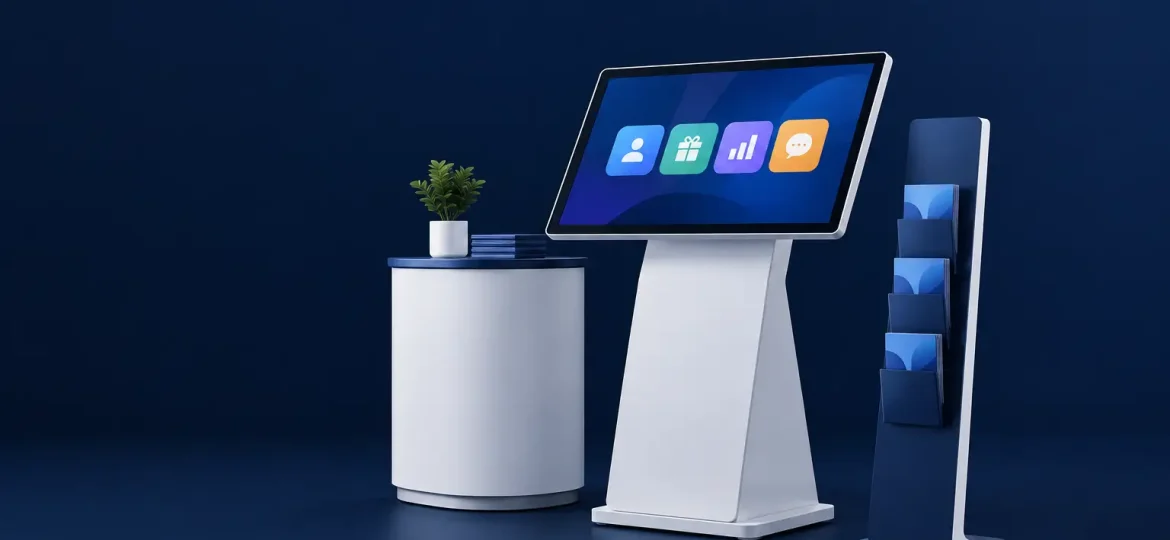
A crowded exhibition hall can create a false sense of success. People may stop, take a photo, or collect a giveaway, yet leave without understanding what your organization does or why a follow-up conversation matters. The best conference booth engagement tools create a reason to pause, participate, and share useful information – while giving your team a practical way to continue the conversation after the event.
For marketing managers, event organizers, and procurement teams, the right choice is rarely the most elaborate technology. It is the tool that supports a clear booth objective, works reliably under event conditions, fits the brand, and can be managed without adding unnecessary complexity for staff.
Start with the engagement outcome, not the tool
Before selecting displays, games, or digital devices, define what a successful booth interaction should achieve. A product launch may need demonstrations and educational content. A recruitment event may need a warm, accessible way to start conversations. A corporate communications team may be focused on collecting feedback, while a sales team may need qualified appointments.
These goals lead to different tool choices. A touchscreen quiz can work well when visitors need a quick introduction to a complex service. It is less useful if the real objective is to book detailed consultations. In that case, a tablet-based appointment scheduler and a comfortable discussion area may be more effective.
It also helps to consider the visitor journey. What will make someone notice the booth from the aisle? What will encourage them to stay for more than a few seconds? What information should staff capture, and what will the visitor receive in return? When every element answers one of these questions, the booth feels intentional rather than crowded.
Best conference booth engagement tools by purpose
Interactive product demonstrations
A live demonstration remains one of the strongest ways to earn attention when a product, platform, or process is easier to understand by seeing it in action. Depending on the offering, this could be a physical product trial, a guided screen demonstration, a sample comparison, or a short presentation repeated throughout the day.
The key is to keep the demonstration focused. Visitors standing in an aisle are unlikely to commit to a lengthy explanation. A clear opening statement, one memorable proof point, and a natural next step give staff a structure they can repeat consistently.
For organizations with an intangible service, visual storytelling can make the offer more concrete. Before-and-after visuals, case-study panels, process diagrams, and short motion graphics help visitors understand the value without relying on dense brochures. High-quality display production matters here because the booth itself is part of the demonstration of your brand standards.
Lead capture tools that respect the visitor’s time
Badge scanning, staff tablets, QR code forms, and digital registration pages can all capture leads. The best option depends on the event and the quality of information your team needs. Badge scanning is fast for high traffic, but it may provide limited context. A short qualifying form can provide more useful data, though too many fields can discourage participation.
A practical approach is to capture only the information needed for the next action. For example, a visitor might choose their area of interest, indicate their preferred contact method, and select whether they want a demonstration, resource, or meeting. This gives the sales or marketing team a clearer follow-up path than a long list of unfiltered contacts.
Staff should also have a simple method for adding notes. A scanned badge without a conversation record often becomes a name in a database. A short note such as “interested in employee onboarding” or “reviewing vendors this quarter” makes follow-up more relevant and timely.
Branded games, quizzes, and challenges
A well-designed game can attract foot traffic and make a brand easier to remember. The most effective versions are tied to the organization’s message rather than operating as a separate attraction. A sustainability-focused business might use a short challenge about material choices. A technology provider might create a timed problem-solving activity based on a common customer issue.
Games have trade-offs. They can generate energy and participation, especially at public-facing events, but they may also attract visitors interested only in prizes. To improve lead quality, make the activity short and use a light qualifying question at the end. Staff can then continue the conversation based on the visitor’s result or selection.
Physical activities can be just as effective as digital ones. A branded spin wheel, card-based challenge, or message wall may suit a booth where electricity, Wi-Fi, or staffing capacity is limited. The execution should still feel considered, with clear instructions, durable materials, and brand-aligned visual design.
Useful branded merchandise
Promotional merchandise is not a substitute for engagement, but it can extend the interaction beyond the event. The strongest items are useful, relevant to the audience, and connected to a clear moment in the booth experience. A visitor who completes a consultation, attends a demonstration, or shares meaningful feedback can receive an item that reinforces the exchange.
Avoid choosing merchandise solely because it is inexpensive or easy to distribute. Items that feel generic are often left behind in hotel rooms or discarded after the event. Consider the audience’s working environment and the practical life of the item. Quality notebooks, drinkware, tech accessories, travel items, and thoughtfully packaged kits can have stronger staying power when selected with purpose.
Brand consistency matters as much as usefulness. Colors, logo placement, packaging, and message hierarchy should align with the booth design and wider campaign. This is where coordinated creative, print, and corporate gifting support can reduce the risk of mismatched materials arriving from separate suppliers.
QR-led content and digital follow-up
QR codes are useful when they lead to something visitors genuinely want: a practical guide, event-only resource, product comparison, registration page, or post-event meeting request. They are less effective when they simply send people to a general homepage with no clear next step.
Place codes where they can be scanned comfortably and pair them with a reason to act. “Get the event checklist” is more compelling than “Scan here.” Use a short, readable call to action and ensure the landing experience works well on a phone. If internet coverage at the venue is uncertain, keep essential content available through staff devices or printed materials as a backup.
Digital follow-up should be planned before the event begins. The message sent after a scan or registration should reflect what the visitor requested, not a generic campaign email. A timely response also demonstrates the same level of professionalism that visitors experienced at the booth.
The overlooked engagement tool: booth staff preparation
No tool compensates for a team that is unclear about the offer, hesitant to approach visitors, or unsure how to handle data capture. Staff preparation is a core engagement investment.
Give the team a simple conversation framework: an opening question, a concise explanation of the offer, a way to identify visitor needs, and a clear invitation to take the next step. They should know when to demonstrate, when to hand over a resource, and when to move a conversation to a quieter meeting area.
Roles should be assigned in advance. One person may welcome passersby, another may conduct demonstrations, and another may manage meetings or lead capture. In a small booth, these responsibilities may rotate, but the workflow should be clear. This prevents the common situation where everyone is speaking to one visitor while other interested attendees walk past.
Build an integrated booth experience
The most effective booths do not rely on a single engagement tool. They combine a visible reason to stop, a meaningful activity or conversation, and a useful next step. A demonstration can lead to a short consultation. A quiz can lead to a tailored resource. A branded giveaway can reinforce a scheduled follow-up.
Operational details deserve the same attention as creative concepts. Check power requirements, device charging, internet access, data privacy procedures, stock levels, transport arrangements, and setup time. A polished idea can lose its value if tablets fail, merchandise runs out early, or staff cannot access lead information.
For organizations managing multiple event elements, working with an integrated partner can simplify coordination across booth graphics, printed materials, branded merchandise, digital touchpoints, and event support. Diverse Solutions Singapore approaches these details as connected brand touchpoints, helping teams translate a campaign idea into an experience that is practical to deliver and consistent in presentation.
The right tool is the one that makes it easier for the right visitor to begin a worthwhile conversation. Design that moment with care, prepare the team to carry it forward, and the booth can continue working long after the exhibition hall closes.
