

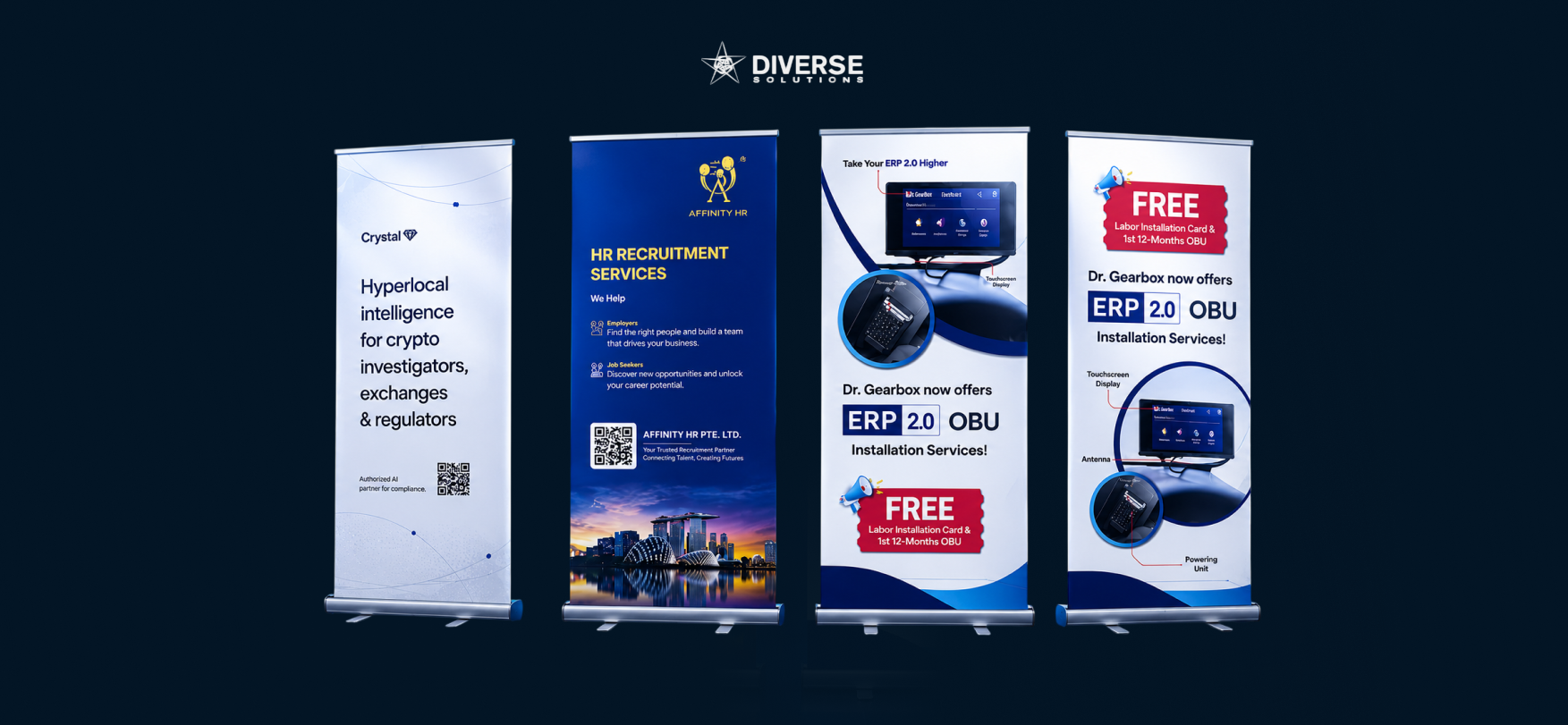
When a campaign stalls, it is rarely because the logo looked wrong on screen. It usually breaks down when the printed pieces arrive late, colors shift across materials, or the flyer, backdrop, folder, and gift item feel like they came from four different vendors. That is where custom printing starts to matter – not as a commodity, but as a business tool that keeps brand execution consistent.
For marketing teams, procurement leads, event planners, and business owners, print is still one of the most visible parts of brand delivery. Sales kits get handed over in meetings. Event backdrops frame every photo. Packaging, signage, brochures, certificates, invitation cards, stickers, and branded inserts all shape how an organization is perceived. Good print supports credibility. Poor print creates friction fast.
Why custom printing still matters
Digital channels move quickly, but printed materials often carry the weight of real-world brand experience. A prospect may forget an email. They are less likely to forget a well-produced presentation folder, a premium event pack, or a retail display that looks sharp and intentional.
Custom printing gives businesses control over how a brand appears across touchpoints. That includes format, material, finishing, sizing, color application, messaging, and quantity. More importantly, it allows teams to align print output with purpose. A corporate annual report should not be treated the same way as a roadshow leaflet. An employee welcome kit should not feel like generic office stationery.
This is the real advantage. Customization is not about adding a logo to a surface. It is about making each printed asset fit the audience, setting, and business objective.
What businesses expect from custom printing
Most organizations are not simply looking for a printer. They are looking for a partner who can translate a brief into finished materials without unnecessary back-and-forth, missed details, or production surprises.
That expectation is reasonable. Business printing often sits inside a larger project – a product launch, an exhibition, a client onboarding program, a government outreach effort, a school event, or an internal campaign. In these cases, print has to work with other deliverables such as branded gifts, event setups, signage, digital artwork, and photography. If one piece falls out of sync, the entire execution feels weaker.
This is why commercial buyers tend to value three things above all else: reliability, customization capability, and operational range. They want a vendor that can handle standard jobs efficiently, advise on materials and finishes when needed, and support multiple assets under a single production plan.
Custom printing for different business needs
Not every print requirement is high-volume, and not every job needs premium finishing. The right approach depends on context.
For corporate communication, custom printing often includes brochures, presentation folders, letterheads, notepads, certificates, annual reports, and training materials. Here, consistency and readability are usually more important than visual experimentation. Clean layout, accurate brand colors, and durable stock do most of the work.
For events and activations, the priority shifts. Speed, visibility, and cohesion matter more. Booth panels, banners, backdrops, table wraps, flyers, directional signs, tent cards, name tags, and branded merchandise need to feel connected. This is where a one-stop production approach saves time because design adaptation, item sourcing, and print coordination can happen together.
For gifting and promotional campaigns, print often extends beyond paper. Packaging sleeves, box inserts, product tags, labels, thank-you cards, and branded collateral shape the unboxing experience. These supporting pieces are easy to underestimate, but they often determine whether a gift feels thoughtful and premium or rushed and transactional.
For institutions and public-sector projects, requirements can be more structured. Clear specifications, approval workflows, repeated runs, and accountability matter as much as creative output. In those cases, a dependable production partner becomes valuable not because of flashy ideas, but because they can deliver accurately and consistently over time.
The trade-offs behind print decisions
One of the biggest misconceptions about custom printing is that there is always a single best option. In practice, it depends on budget, timeline, quantity, and intended use.
A thicker stock may feel more premium, but it can increase cost and shipping weight. Special finishes such as embossing, spot UV, foil stamping, or lamination can elevate presentation, but they also add lead time. Large print runs may reduce unit cost, yet they can create storage issues or waste if details change later. Fast turnaround is possible for many jobs, but complex customization usually benefits from more planning.
That is why the strongest print outcomes come from clear prioritization. If the asset is meant for high-stakes client presentations, appearance may matter most. If it is a short-term event handout, speed and quantity may be the main concern. If it is a campaign with multiple components, consistency across formats may carry more value than making one item overly elaborate.
An experienced print partner should help clients make these decisions with business logic, not just production jargon.
What to look for in a custom printing partner
Capability matters, but capability alone is not enough. The right partner should make the process easier, not more fragmented.
Start with range. Can they support everyday print collateral as well as branded event materials, packaging elements, signage, and supporting creative pieces? A broader service scope reduces coordination across multiple vendors and lowers the risk of mismatched output.
Next, assess consultation quality. Reliable providers do more than quote. They ask where the item will be used, how many versions are needed, what timeline matters, and what finish is appropriate for the purpose. That kind of guidance prevents expensive revisions later.
Execution discipline is just as important. File checks, color consistency, proofing, quantity accuracy, production updates, and delivery coordination all shape the client experience. The best vendors are creative, but they are also process-driven.
Finally, consider whether they can support the bigger picture. Many organizations no longer need print in isolation. They need a coordinated mix of branded merchandise, design adaptation, event support, and campaign materials. A one-stop agency model is often more efficient because strategy, sourcing, and production can move in parallel.
Why one-stop custom printing makes commercial sense
Managing multiple vendors may seem manageable on paper. In reality, it often creates duplicated briefings, version control issues, inconsistent branding, and longer approval cycles.
A one-stop provider simplifies the chain. The same team can align artwork across printed collateral, gifts, signage, packaging, and event materials. Messaging stays consistent. Timelines are easier to control. Procurement becomes more straightforward because fewer moving parts need separate follow-up.
This model is especially useful for product launches, conferences, employee engagement campaigns, school events, roadshows, and festive gifting programs. In these projects, print is rarely working alone. It needs to match physical products, creative themes, and venue requirements.
That is where a company like Diverse Solutions Singapore fits naturally into the conversation. The value is not only in producing printed items, but in connecting print with branding, merchandise, creative production, and event execution under one roof.
Getting better results from custom printing
The best print jobs usually start with a better brief. Not a longer one – a clearer one. State the purpose, audience, quantity, deadline, and where the item will be used. Share brand guidelines early. Flag any mandatory wording, approvals, or delivery restrictions from the start.
It also helps to be honest about priorities. If budget is fixed, say so. If speed matters more than premium finishing, make that clear. If the item needs to impress a C-suite audience or support a major launch, mention it. These details shape recommendations on stock, finishing, size, and production method.
Proofing should never be treated as a formality. It is the checkpoint that protects quality, especially when multiple items are being produced at once. A careful review of artwork, dimensions, names, dates, and quantities can prevent avoidable waste.
Most importantly, think beyond the single item. Strong custom printing works best when every asset supports the same brand story. A brochure, welcome kit, event backdrop, product insert, and appreciation gift do not need to look identical, but they should feel like they belong to the same organization and campaign.
Print still carries weight because it shows up in moments that matter – the meeting room, the event floor, the onboarding table, the retail shelf, the media photo, the client handover. When those moments count, custom printing is not a final step. It is part of how a business shows that it is prepared, consistent, and serious about its brand.
