

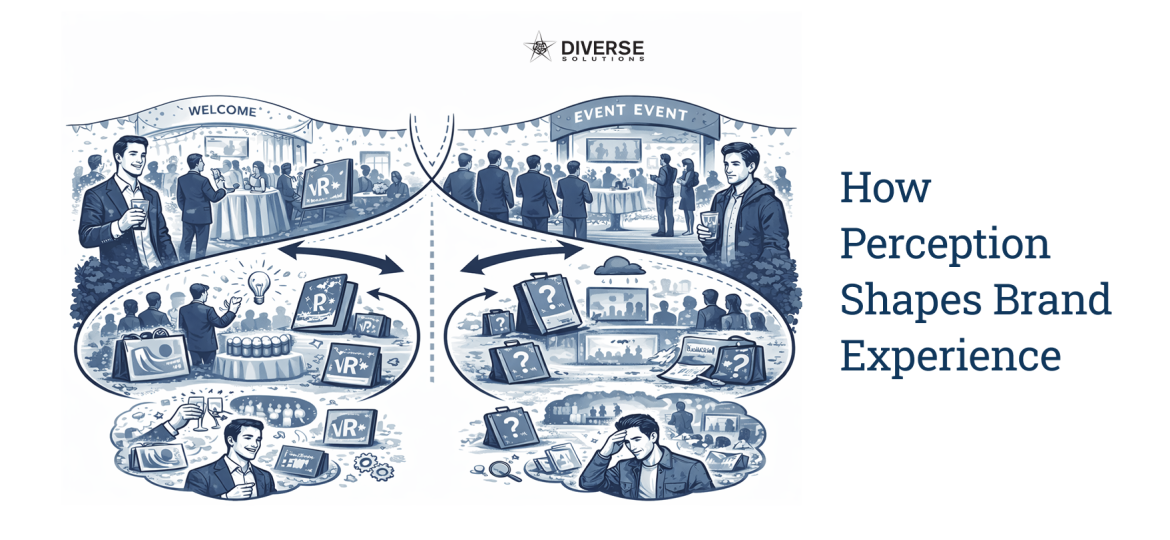
Brand experience. Have you ever attended the same event as someone else, only to realize you both walked away with completely different impressions?
This happens because people don’t respond to reality itself—they respond to how they interpret it. In organizational behavior, perception plays a critical role in shaping decisions, emotions, and overall experiences.
For businesses, this insight is powerful. It means your audience doesn’t just evaluate what you do—they evaluate how it feels.
What Is Perception in a Business Context?
Perception refers to how individuals interpret and make sense of information around them. According to organizational behavior principles, people filter reality through their own experiences, expectations, and biases.
In practice, this means:
- Two clients can experience the same service differently
- The same brand message can create different emotional responses
- Small details can significantly influence overall impressions
Perception is not accidental—it is shaped by design.
Why Perception Matters for Brand Experience
In today’s competitive environment, products and services alone are not enough. What differentiates brands is the experience they create.
Every interaction contributes to perception:
- The visual identity of your brand
- The atmosphere of your event
- The quality of materials you present
- The consistency across digital and physical touchpoints
Customers don’t just remember what happened—they remember how it made them feel.
The Role of Touchpoints in Shaping Perception
A brand experience is built through multiple touchpoints, both visible and subtle. These include:
- Visual Communication
Design elements such as colors, layouts, and printed materials influence how professional and trustworthy a brand appears.
- Physical Experience
Events, environments, and tangible items create sensory impressions that strengthen emotional connections.
- Digital Presence
Websites and online platforms act as the first point of interaction, shaping expectations before any direct engagement.
- Memory Triggers
Takeaways such as souvenirs or corporate gifts extend the experience beyond the initial interaction, reinforcing brand recall.
When these touchpoints are aligned, they create a cohesive and memorable experience.
From Random Experience to Intentional Design
Many businesses leave perception to chance. However, leading brands take a different approach—they design experiences intentionally.
This involves:
- Understanding audience expectations
- Creating consistent messaging across channels
- Paying attention to both major and minor details
- Ensuring every interaction supports the brand narrative
Perception, in this sense, becomes a strategic asset rather than a byproduct.
Conclusion: Perception Is Designed, Not Left to Chance
At its core, perception defines how your brand is understood and remembered.
It is not shaped by one big moment—but by a series of small, intentional decisions.
From the first impression to the final takeaway, every detail contributes to how your audience experiences your brand.
Because in the end, people may forget what happened— but they will always remember how it felt.
For more information and to explore our offerings, visit Diverse Solutions Singapore.
