

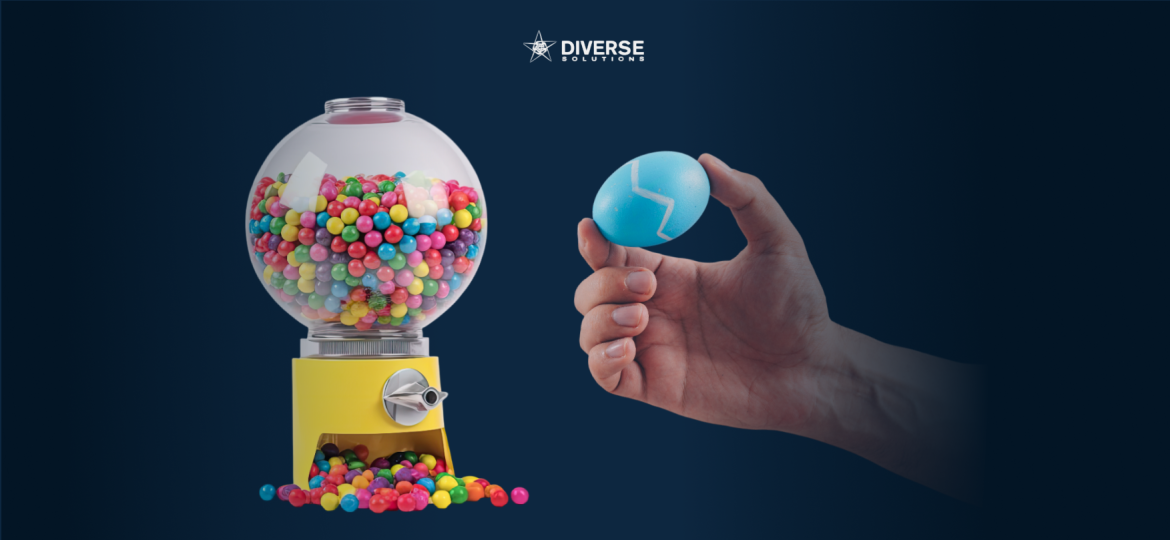
The blind box phenomenon—a mystery item sold in sealed packaging—has grown from niche hobby to global business powerhouse. What began as Japan’s playful gachapon capsule toys has evolved into a multibillion-dollar industry that blends surprise, collectability, and emotion. Understanding Blind Box history offers insight into modern consumer psychology and the cultural forces behind “the thrill of the unknown.”
Origins: The Birth of Gachapon in Japan
The roots of Blind Box history trace back to the 1960s and 1970s in Japan, when vending-machine capsule toys, known as gachapon (or gashapon), gained popularity. Named after the sound of the machine (“gacha” for the crank and “pon” for the capsule drop), they were inexpensive collectibles offering random surprises.
According to Japan’s KADOKAWA Research Institute, Bandai—the leading gachapon manufacturer—introduced its first capsule toys in 1977, sparking a craze that would later define Japan’s toy culture. By the 1990s, gachapon had become a pop-cultural staple, featuring characters from anime, manga, and video games.
Evolution: From Capsules to Designer Collectibles
In the early 2000s, the blind box format transformed. Companies like Kidrobot in the U.S. and Mighty Jaxx in Singapore reimagined the concept for adult collectors, merging art, design, and limited-edition exclusivity.
These new iterations tapped into the designer toy movement, where artists produced small runs of collectible figures—often sold in blind boxes to heighten excitement and exclusivity.
A Forbes (2022) report noted that adult collectibles, including blind boxes and designer figures, reached a global market value exceeding $17 billion, projected to grow by 9% annually through 2027.
The Psychology of Surprise
The success of blind boxes isn’t accidental—it’s psychological. Research from Harvard Business School (2019) and the Journal of Consumer Research shows that uncertainty in purchases can heighten excitement and dopamine release.
Just like gambling or gaming, the variable reward mechanism keeps consumers coming back, hoping to “unlock” rare items. This makes blind boxes addictive in a controlled, socially acceptable way—one built around fun, curiosity, and collection.
China’s Billion-Dollar Blind Box Boom
The blind box craze exploded in China around 2018 with brands like Pop Mart, which merged art and technology to reach Gen Z consumers. Pop Mart’s IPO in 2020 raised over US$670 million on the Hong Kong Stock Exchange, valuing the company at nearly US$7 billion (source: Bloomberg, 2021).
According to a Deloitte China (2022) report, the blind box market in China surpassed US$3 billion. It was fueled by social media sharing, unboxing culture, and strong emotional branding.
Blind Boxes Meet Digital: NFTs and Virtual Collectibles
With the rise of Web3 and blockchain, blind box mechanics have migrated online. NFT platforms now offer digital mystery packs, mimicking the thrill of physical unboxing.
This cross-medium evolution shows how Blind Box history continues to adapt—melding nostalgia with digital innovation.
As MIT Technology Review (2022) noted, this blend of surprise and ownership psychology drives engagement far beyond traditional e-commerce.
Cultural Impact and Global Reach
From Tokyo to Times Square, blind boxes have reshaped global consumer culture. They’ve become a symbol of modern emotional consumption—where people buy experiences, not just objects.
- Pop culture tie-ins (Disney, Marvel, Sanrio) amplify collectibility.
- Limited editions create social status within collector communities.
- Unboxing videos on TikTok and YouTube turn personal surprises into viral entertainment.
What began as a playful vending-machine gimmick now represents a fusion of art, psychology, and commerce.
The Future of Blind Boxes
As sustainability becomes central to design, brands are exploring eco-friendly packaging and digital alternatives. Analysts from Euromonitor International (2024) suggest that future blind boxes will focus on personalization. It will allow buyers to influence outcomes while retaining the excitement of surprise.
The next chapter of Blind Box history will likely merge AI, augmented reality, and experiential retail—continuing to blur the line between product and emotion.
Conclusion
From humble gachapon machines to billion-dollar collectibles, the story of blind boxes is one of creativity, culture, and psychology. Blind Box history reveals how the universal desire for surprise and connection continues to evolve.
For more information and to explore our offerings, visit Diverse Solutions Singapore.
